Tag Archives: empathy

Intense deep blue sky above a sandy beach and sand dune and the shadow outline of Harriet

Learning to breathe into the quiet moments

Breathing in between the gluggle jugs and jumpers: lessons from the shopfloor on leaning into a slower pace

Greetings from Ilkley where I’m writing this sitting in bed with a morning cup of tea, curtains still drawn masking the still black sky and hints of sleet and snow forecast for later. I’ll give my Vitamin D a much-needed boost later and do a shift at my other job in Oliver Bonas where the sale rails have made way for sherbet-like Spring colours that do not match the sky outside.

From pink knitted cardigans edged in orange, and this turquoise jumper that’s been flying off the shelf to this cafetiere and these espresso mugs in sunburst ombre shades called ‘Tresillo’ which according to Wikipedia is a Latin American rhythm.

All very peppy and perky and the perfect antidote to the murky sky outside.

The intensity of those Christmas, Twixmas and New Year shifts I wrote about last year has given way to a gentler rhythm, but I have been told there might be a pre-Valentine’s Day rush for cards and jewellery and to be ready for blank faces responding to gentle enquiries of ‘Does she prefer silver or gold?’.

Embracing a slower pace

I think the biggest challenge in these early 2024 shifts (other than taking a photo I’m happy to wear on my new lanyard) has been this slower pace.

The fast pace and intensity of Christmas was my normal and when January hit things inevitably slowed down. Customers were back to work and fed up with the persistent gale force winds and torrential downpours. Bored of wrestling themselves into waterproof coats and shoes, shoulders perma-hunched and heads dropped to withstand the wind.

Shopping weather it ain’t and those that were brave enough to venture out weren’t always in the mood for a chat.

I noticed how I’d fidget in the quiet moments, rock backwards and forwards from the balls of my feet to my heels. I’d do laps of the store righting photo frames, twitching jumpers on hangers that I’d lined up on my previous lap.

There were classic water cooler conversations about what to watch. Everything from Band of Brothers to Vigil and Mr Bates vs the Post Office. But I’d struggle to switch from conversations about the episode of The Great Pottery Throwdown where the contestants made gluggle jugs and how I was sure that our gluggle jugs appeared in the background, back to serving mode. My mind would often go blank when faced with the till.

But I do delight in saying the word gluggle and I defy you to say it and not smile too.

It took a few shifts to work out that while this quieter, slower pace wasn’t exactly normal, it wasn’t not normal. I just had to lean into it and remember to pause and breathe.

I’ll add here that I do two four-hour shifts a week which means I often miss things like unpacking big stock deliveries and I’m often not around for the big merchandising switcheroos. My focus is always on the customer, covering the lunchtime shift and handling the restock where we bring up products from the stockroom to replace stock we’ve sold.

It has given me time to start getting to know my colleagues though, and them me. We’ve had chats about my writing and their studies. A couple of them are students so we talk about how and where we get the work done. I introduce them to Writers Hour. We talk accountability and the merits of studying in cafes, where the best local co-working spaces are and how we love our local library.

We share stories about our families, my children who are closer in age to many of my colleagues than they are me. I’m asked, ‘Would you ever move back down south?’ to which I answer, ‘I’m not sure, but I do love the Northumberland coast.’

It’s ok to relax into the slow moments

I’m reprogramming my brain and body to relax in these slower moments, to allow myself to stand and just be. The shop can change a lot in between shifts and this slower pace gives me a chance to discover the new lines and rediscover existing products given a new perch, in between wiping finger marks off the glass jewellery cabinets and dust from plant pots released from the dungeon.

Cool head, warm heart

Without going too deep about all of this, what I’ve noticed is that my tendency to want to be seen to be doing something, that ‘look at me and what I’ve done, I’m busy busy’ to prove my usefulness and value is so very deeply ingrained.

I’m learning though that it’s ok, that it is in fact sometimes part of this job, to simply be there, ready to smile a hello. You’re not exactly doing nothing, because you’re always ‘on’ but taking a moment, standing still is ok.

I also have a habit of responding overly quickly to requests and questions, often with a speed and urgency that isn’t warranted and that’s when I make mistakes. I rush, charge at things, forgetting that no one’s timing me on how long it takes me to run down the stairs to retrieve a Click and Collect parcel.

Cool head, warm heart is our mantra.

And don’t forget to breathe

I guess it’s a bit like those moments mid-warrior pose in yoga, the hundreds in pilates or squats in any exercise class when the instructor helpfully calls out, ‘Don’t forget to breathe’ and the whole class groans, because what the heck? You want me to breathe as well as co-ordinate my limbs and button in my abs.

Well, yes. Learning to pause and breathe is so bloody helpful but it’s something that I think a lot of us need reminding to do. It’s why I turn to Suzy Reading and her book ‘Rest to reset’ for simple guidance and practical exercises you can do anywhere.

Thank you

I’ll sign off with a heartfelt thank you to everyone who reads my words, whether you’ve just found me on Substack or you’ve been receiving my sporadic emails from the beginning in those heady pre-Substack days.

I’m incredibly grateful for every subscribe, like and comment and particularly enjoyed the piano conversations on the back of my last post and hope that it has nudged a few more people to play again.

Thanks for reading! Til next time, Harriet

Traditional shop front, central door with large windows either side with lots of light fittings and lampshades. The woodwork is all a mid blue and there's a black traditional bicycle parked outside the shop

Swapping the notebook for the shopfloor

I’m swapping my navy walled home office for manning the till, tidying shelves and chatting with customers. I loved my first shift on the shop floor, let’s see how I feel after Black Friday weekend.

Hello! Welcome, come on in out of the cold, how are you this Black Friday weekend? Throwing yourself into the fray or hiding behind the cushions? I’m normally wedged on the sofa at this point, fingers in ears all la-la-la-la, ignoring the madness.

But this Saturday afternoon – Black Friday weekend and Ilkley Christmas lights switch on – I’ll be working my second shift in Oliver Bonas. Yep, I’ve got myself a job that means leaving the house and working with people in real life.

And here’s the thing, walking home after my first shift on Tuesday afternoon I felt a definite un-autumny/wintery like spring in my step. I’d spent several hours being shown how to use the till, ‘it’s really easy when you know how’, had an in-depth tour of the shop, its products and cavernous basement stock room.

I’d practiced wrapping products and chatted with a woman visiting from out of town. She’d bought this vibrant pink fan-patterned skirt in her local store a few weeks before but liked the look of this navy long sleeve top to go with it.

I spotted a friend twirling the greeting cards stands and popped over to say hello. ‘How lovely to work somewhere where you’re surrounded by lovely things,’ she said. Our noses twitched towards the shelves of scented candles and she whispered, ‘you know, this is great but I’ve always fancied working in Betty’s’.

I guided a woman to a mirror in a quiet corner of the store so she could try on some sparkly hair slides unobserved. I released my inner neat freak and tidied shelves of mugs, scarves and candles, and straightened clothes on hangers. I smiled with the couple having a little sing and shoulder shrug when they heard Sister Sledge playing.

I felt like you do when you turn up the brightness on your phone and it felt joyous.


I’ve been in a quiet phase freelance writing wise after hitting the buffers in the summer, the diary a lot emptier after cutting ties with my biggest client before our Scottish summer holiday.

I’d been ignoring the patches of eczema on my left cheek for too long and it was too easy to blame my interrupted sleep on menopause rather than the fatigue and anxiety brought on by the mental gymnastics involved in writing for a (lovely) client based partly in Australia, partly in the UK, with clients spread across the world.

Others might have coped better with the increasing workload, screen conversations and time zone differences, but I could feel myself slipping into chronic fatigue mode, and the breaks I’d put in place to recharge weren’t enough.

My words and ideas were going stale. I was snappy and irritable, prone to teary outbreaks and had to admit that even though I’m five years post-cancer and my chronic fatigue / fibromyalgia has disappeared – officially at least – both have left their imprint.

I used to get annoyed with my rollercoaster fatigue levels, exacerbated at this time of year when Vitamin D mostly comes in capsule form, but getting annoyed doesn’t help.

I have to accept that my fatigue – all heavy, tingling limbs, my brain a black hole where words and ideas vanish and forget making even the simplest of decisions – is triggered far more quickly and easily than others and adapt my working and home life accordingly.

Comparing myself to others is pointless and I have to remind myself that mental fatigue can be so much more debilitating than a burpee heavy HiT session on a Monday morning.


Maybe having a mix of jobs is the way to go right now, maybe I need a different type of flexible working, one that doesn’t involve working exclusively for myself and from home. Maybe having a job with clearer physical and mental boundaries is better for me. I love writing, but it’s no respecter of boundaries.

Other than a year-long stint as a special educational needs teaching assistant in 2016 cut short when we moved to Ilkley, I’ve worked for myself and from home since January 2008. It’s allowed me to flex with the kids schooling, relocations and illness.

But I remember how much I loved those afternoons wandering through the school corridors with a child who couldn’t, wouldn’t, shouldn’t be made to sit neatly in the classroom. They loved the world map near reception, pointing to countries they’d visited, especially the farm in their father’s home country where their grandparents lived. They came alive when talking about feeding the chickens and goats, before running off round the corner with me in hot pursuit.

I loved seeing them root through the bookshelves finding books they’d want to read, anything with food in it was a win. We’d head to the small garden in a corner of the playground or find a table and chair to play with Lego.

I loved the hard start and stop to my working hours – you can’t argue with a clanging school bell – and the unpredictability of walking into a classroom partway through the day and never quite knowing what had gone before or was about to happen.

Working every afternoon gave my weekdays structure and were a temporary distraction from the grief of mum and dad’s deaths. The job coming at a point where I was in rebuild mode, working my way out of peak grief and putting down roots in our new home town, Bournemouth. Those afternoons in school gave me purpose and I felt my confidence quietly growing week on week.


I’m in a different place now – literally and emotionally – but it’s funny how these things stay with you. Even going through the interview process at Oliver Bonas was a confidence boost, discovering that they valued all that messy and complicated work and life experience far more than having worked a till before (although me not being scared of the till would be a bonus). Sometimes change is good.

The job is only until the first week of January and a few afternoons a week, so there’s still time for me keep my freelance writing ticking over too. But it’s sparked something in me so let’s see where I go with it.


I figure the micro moments I’ll spend with customers and colleagues are just the glimmers I need, and I know I’m not alone. It’s not surprising that we’re craving light and warmth and pockets of joy and connection right now, is it?

So maybe, find a place where you can engage all the senses, wrap yourself in all the textures and colours, inhale the scented candles and diffusers. Brush your hands across soft wool jumpers and scarves and just breathe, even if it’s for a few minutes. 

Thanks for reading, Harriet

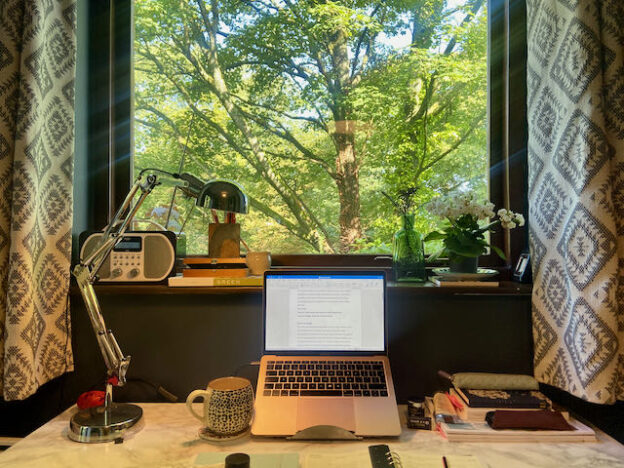
Harriet's desk covered in notebooks, her laptop, pens and pencils and an anglepoise lamp. Behind is a windoow full so sky and green leaf trees and a window sill with ceramic jugs, a radio, a white flowered plan and a vase full of pencils.

Truth and honesty

I started this on Monday, got as far as uploading it and even added a few photos, but I left it in drafts because something wasn’t quite right.

Later in the day I had a call with a writing coach, she was using it as research to help refine her coaching package (she’d put a shout out on LWS for writers to talk to) and I was interested because I’ve been thinking about finding a writing coach for a while. It was 30-minutes of perceptive questioning and I hope she got as much out of it as I did.

‘You’ve painted the picture of the kind of writing you want to do Harriet. So, what’s stopping you from doing it?’

‘What’s stopping me?’

Pause

‘Oh,’

‘Well, I guess that would be me.’


There was something about the silence and her calm face staring at me through the Zoom screen that pierced my habitual brush it off and deflect armoury.

I had to be honest, what was stopping me was not the writing, but that other people, names on a subscriber list, people I could picture and even know in real life, might actually read it.

I’ve got into the habit of writing more vulnerable posts, sometimes even sharing them on my website, but not actually telling anyone they exist. Substack gave me the option of sharing this with subscribers, the first time I’ve written openly about alcohol addiction, something that dominated our family life growing up. But I unticked the box.

I was comfortable having written the words out of me, I felt lighter. But there was something about sending them into people’s inboxes that felt like a step too far.

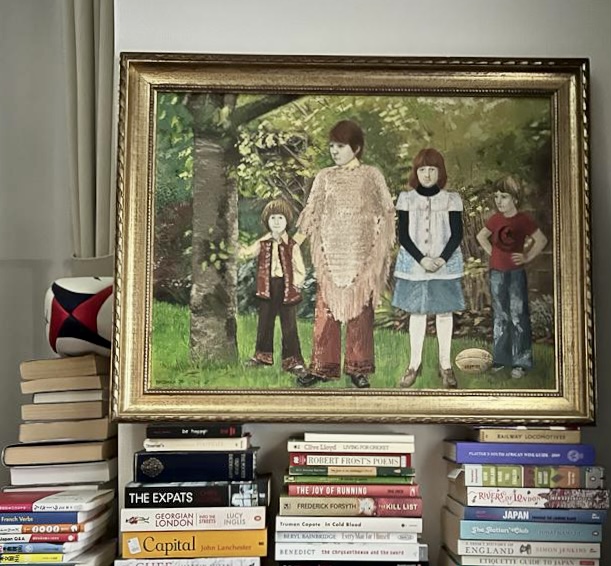
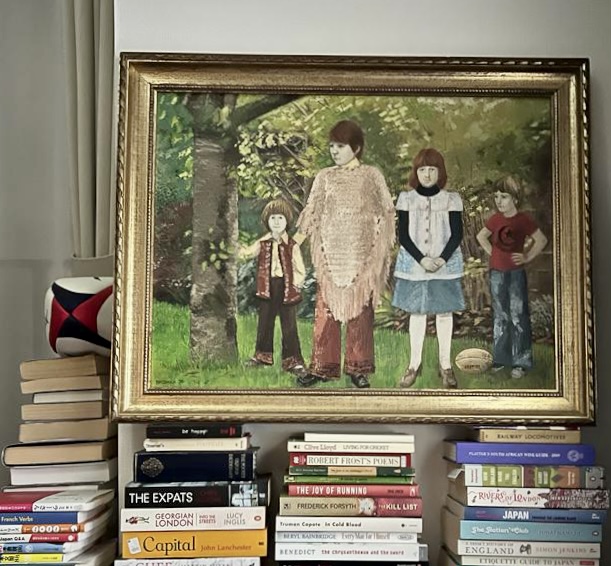
But the thing is, mum was a talented artist, she went to Hornsey Art College in the late 1950s and when she died she left a huge body of work – sketches, acrylics, oils, watercolours – that we proudly showed at her funeral. But she never got comfortable sharing her work more widely than on the walls of our home. The tension between her desire to create and the fear of showing her work was palpable.


I suspect I wasn’t the only one to have a wry smile at her wake, wondering what she’d make of us daring to adorn the walls of the restaurant with her work. An eye roll for sure, probably a ‘Oh, for goodness sake’ too.

I don’t want to be held back by that same tension and if I’m serious about writing memoir and creative non-fiction, I need to get comfortable with being honest and brave about getting my thoughts into the world.

I’ve been partially committing to it for too long, tip toeing around, waiting and wanting someone else to give me permission to pass go. And with words like ‘truth’, ‘in denial’ and ‘honesty’ peppering family conversations in recent weeks, it’s hard not to look myself in the mirror and ask a few searching questions too.


“But in the end, stories are about one person saying to another: This is the way it feels to me. Can you understand what I’m saying? Does it feel this way to you?”

Kazuo Ishiguro, Nobel Lecture

I figured I’d move my newsletter to Substack where I knew I’d be surrounded by writers, thinkers and creatives all sharing their work. I’m a newbie, but being in this space is already helping me to view the words I’m putting into the world with fresh eyes, asking myself, ‘what kind of writing do I want to be known for?’ and ‘what’s stopping me from just f****** doing it?’

It’s the virtual kick up the backside I needed.


But look, my reflex is to swiftly change the subject now, and move away from the navel gazing before it gets too uncomfortable plus, I need to pack.

We’re heading to Scotland tomorrow. First stop to Mabie Forest before a second week in a treetop house in Nairn. Cue bigger, wilder skies than even Ilkley Moor has to offer, but I reckon I’ll leave the combat archery to Andy and the teens and stick to walks, reading and maybe the odd bike ride.

Thank you for reading, I’ll be back with another newsletter in a couple of weeks. Possibly, probably, but definitely at the end of August. But feel free to pop back just in case I’ve gone and posted something without telling any of you again and scroll a little further for my read, watch and listen list.
Harriet


Harriet’s read, watch and listen list

Read

Fiction: Demon Copperhead, Barbara Kingsolver because I need a good read to lose myself in and because it’s Barbara Kingsolver.

Memoir: Sins of my father, Lily Dunn This has been on my to-read list for ages. It is very, very good but I’m reading it slowly as some of the content is a little close to the bone.

Self-care: Rest to reset, Suzy Reading I just carry this with me, leave it where I can see it as a reminder too pause.


Watch

I’m so far behind the Grey’s Anatomy curve it’s embarrassing. I’ve watched four episodes though which means there are only 416 to go. How did I miss it first time round? Simple. I had a newborn and two-year old toddler to contend with back in 2005 and CBeebies was the only TV channel we watched with any regularity. But I now have my 14 year old to thank for getting me into it.


Listen

Conversations with Annalisa Barbieri: Processing grief with psychotherapist and co-founder of The Good Grief Project Jane Harris I haven’t finished this yet, but it’s very good.

All at sea

I’ve been feeling at sea these past few weeks. It’s those tell-tale signs that crop up the week leading up to mum’s anniversary. It’ll be eight years on Wednesday 24th May.

Her death is sandwiched in between the boys’ birthdays. This year it’s Ollie’s 18th on the 21st and Charlie marks the end of his teens and the start of his twenties on the 25th, plus the 24th May coincides with Ollie’s first A level exam. Four days of seesaw emotions but as ever, the emotions aren’t restricted to those days.

Because as much as I’d like to say I’m fine, the reality is more complex. I miss her every day and I think about her every day. How could I not? It seems odd to pretend otherwise, yet I think that’s what I try to do. I just keep going because that’s what you do with grief. You find a way to keep going.

I carry her loss more lightly these days but there are times when I feel her absence intensely and have this overwhelming need to try and connect with her, pay attention to who she was rather than the fact that she isn’t here.

Reconnecting when they’re gone

When it does strike I sink into a melancholy. I don’t want conversation. I want to just hunker down, be at home, be quiet until I’m ready to re engage again. I do this hiding in plain sight but that’s where my head is during dog walks or mooching around town, putting the kettle on or choosing music to listen to while I work.


It’s why I’ll do things like go to Salts Mill – she used to go there with her sister when we came to stay with them in Menston all those years back. And if ever a space summed mum up it’s the ground floor with its tables groaning with art books and supplies surrounded by supersized Hockneys and choral music filling the rafters. Or I’ll play the Oscar Peterson plays Cole Porter CD she got me one Christmas, or I’ll listen to Bach’s concerto for two violins which takes me back to a childhood full of Suzuki violin lessons and group performances. I’ll flick through her sketchbook that sits open on the windowsill in our living room. Other times I’ll bake her speciality – a Victoria sponge.

When the memories fade

Because the thing is, my memory of her has faded. I can’t with any certainty hear her voice anymore. Her image lies flat on photos, and I sometimes wish I’d kept her last voicemail. I think I remember it – a question about Saskia’s birthday present, was she buying her the Elsa doll or was Louise.

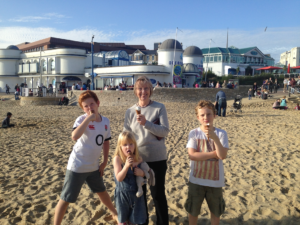
I love having her paintings in my office, the photo of her with the children on Bournemouth beach six months before she died is a joy, the kids remembering that afternoon with fondness.

It’s important that she remain part of all our lives, she shaped me after all. I miss her and I need to not be afraid to embrace this altered reality rather than push it to one side. Learn to go with it, to bend like a willow tree and recognise that these feelings will come, that they will feel intense, and then they’ll settle. But above all, to know that it’s ok to embrace this sadness, to recognise it, acknowledge it.

I wonder sometimes if the fact that she died before we moved up here plays its part but maybe I’d feel that way wherever I was. We all have our special set of circumstances that make our loss and grief unique, my loss is mine and while I share that loss with my family, her friends – my experience, my feelings are mine.

Grief: one messy, knotted skein of wool

I do think that her death, followed so quickly by grandma’s and then dad’s meant that my grief was one big messy, knotted skein of wool. Every time I tried to pull on the mum thread, I’d just get overwhelmed with the enormity of what happened in 2015. I needed to find a way to separate these three people but I couldn’t, no matter how much mum dominated thoughts.

And while deliberately going to a place – physical or otherwise – to connect with her might sound mawkish, why would you deliberately make yourself sad? It soothes and comforts me and sometimes – like this morning – her face popping into my head is the kick up the backside I need.

I’d woken up in my usual foggy state and took a cup of tea back to bed thinking I’ll swerve Writers Hour as I counted and identified my various middle-aged aches and pains – oh the blocked nose and sore throat is back but the sciatica seems to have eased. But then Stevie Wonder’s ‘If you really loved me’ comes on the radio and I’m transported back to our kitchen in Bath. Me mum and Matthew singing and swaying as it plays on the CD Player sitting on top of the piano. I think it was a Christmas Day and I smile, picturing mum’s eye roll and tut at me sitting in bed. It’s the kick up the backside I need, and I head for the shower, make Writers Hour and write this.

The thing is, those early days of grief when I could still hear her voice, still feel her hand on my shoulder were excruciatingly painful. When unexpectedly seeing her handwriting on a card was a punch to the stomach. A visceral loss I couldn’t escape, bringing ugly emotions I didn’t know what to do with, I felt like I was going mad.

How I feel her loss has changed, the acute pain and physical loss has lessened, and that should be and is a good thing. But the loss is still there and there are times, like now, where I feel like I need to acknowledge them.

Writing about grief

It’s not like I don’t know that I’m a boom-and-bust character, it’s just that it still seems to take me by surprise when I emerge from any intense period and then slump.

It’s like a light malaise descends. Yes, there’s a fatigue, but it’s more than just being a bit weary. My body and mind are completely drained.

Take last week. I read at a Spoken Word event on Thursday evening. A lovely, supportive group and I read a five-minute piece about mum’s wake, an extract from a longer essay about mum’s funeral that I tweaked for the spoken word event.

Sitting here on the sofa almost a week later and it’s obvious, isn’t it? That immersing myself in that day would leave me drained. And that’s before I get to the bit where I walk up to the microphone and face a room full of people and quietly berate myself afterwards because I spotted things that weren’t quite right. Observations I should have included and wonder, did I do mum justice? Did I do myself justice?

And I wonder, if this is how I feel after reading just one short extract in front of friends, then what am I doing? Why am I doing this, writing about these difficult times and I start to doubt myself. Who’s interested in my wittering on and what is the point?

But then I tune into a faint bell ringing in the back of my head, because this is how I feel after sharing my words. Not these reflective, this is what I’m thinking, feeling articles. But sharing what happened, describing it, painting the picture in my head and finding a way to translate that onto the page. It takes its emotional toll and if I learned one thing from my years with ME it’s that emotional and mental fatigue can be as, if not more debilitating, than physical fatigue.

The reality is that I spent last week inhaling the incense in the church, feeling the lumpy ground of the natural burial site beneath my feet. Listening to the Ella Fitzgerald and Peggy Lee playlist playing in the background, looking at mum’s paintings and sketches. Sensory overload.

It brings it all up to the surface but it’s not in a bad or sad way. I wasn’t aware of sadness as an emotion when I was writing but I did feel myself sinking back into those days and weeks.

I was aware of tightening the writing, trying to get to the point and hitting the word count whilst being authentic and faithful to mum, my siblings. Painting that picture as vividly as I could and bringing people into the room with me. To help them hear the music, picture the artwork and walk alongside me. But sadness, anger, denial and those other inconvenient emotions associated with grief? No, not last week, but maybe I’m having a delayed reaction. Maybe that’s the fatigue I’m feeling this week.

It’s inevitable isn’t it that in the writing and editing, in the scratching of pencil across paper I reveal myself and my grief. That I see mum, my family and our shared history through other peoples’ eyes and that can be uncomfortable, challenging even.

But I also know that in speaking those words out loud, in feeling them vibrate as they exit my body, move through my throat, touch my mouth, my tongue and teeth and float into the air that they are leaving me. And that’s a good thing, isn’t it? That yes there is an intensity and release that comes with this life writing that brings fatigue, but isn’t that grief too?

Grief and waves are often mentioned in the same sentence, and I remember acutely those knock you to the floor panic attacks, the shallow breathing and emotional outbursts in the immediate aftermath. Those waves of grief that tossed me around.

But I’m in a different phase now – eight years on – that I don’t know how to describe but I do know that this writing helps. It helps me to remember and to acknowledge this loss rather than push it aside.

And there’s also something about living in a place, even if it is a place with strong family ties, surrounded by people who never met mum that urges me to find a way to keep her with me, and maybe writing is how I do it.

Asking for help when you’re a coper

I wouldn’t be much of a writer claiming to explore life in all its messy glory (to repeat my own words) if I wasn’t honest enough to talk about the times when life is too much.

The reality is that I’ve been struggling for a few weeks now, months if I’m being honest. It started with some classic viral symptoms – headaches, sore throats, lack of energy, aching limbs – the usual. But they persisted and were joined by increasingly frequent bouts of tears and arguments about things like what to stuff the Sunday roast chicken with. Until one of my sisters gently suggested that maybe I wanted to think about finding someone to speak to. Someone neutral, a professional, paid to sit there and listen. I took note and started googling local counsellors, I even asked a friend, but didn’t get as far as contacting anyone.

Then on the back of a concerned comment from a colleague yesterday morning I rang the doctor and a few hours later was sitting in the surgery, in tears again, for no apparent reason other than the kind GP asked me to tell her what why I was there. A stream of symptoms emerged from my mouth, although I was annoyed because I’d left my list of symptoms at home and was struggling to remember the details, but no matter, the GP got it.

A full body MOT: mind, body and heart

She was superb. She listened, asked me questions and at the end suggested a bit of a body/mind MOT, starting with blood tests. She mentioned anti-depressants too, but emphasised that she wasn’t making any hard and fast decisions, but wanted to see what I thought. I’m not against the idea. I’ve taken Citalopram twice before, first back in 2009 around six months after Saskia was born, and again a few years later after I was diagnosed with ME/chronic fatigue.

I also had six CBT sessions back then, but didn’t find them particularly useful at the time, and I didn’t try again. I did have grief counselling after mum, dad and grandma died, regularly saw a friend for holistic therapy and had a few sessions with a counsellor at Maggie’s when cancer treatment finished. But I’ve never had long term, consistent talking therapy. And there’s stuff from my childhood alone that would scream, ‘you should talk to someone Harriet’.

The GP was clear about not jumping to any conclusions about any of it. We agreed that it would be too easy to assume that the chronic fatigue was back, or to blame menopause and tamoxifen for the physical stuff, and it was reassuring that she’s very much looking at my physical, emotional and mental health. I told her that I’d emailed a counsellor just before coming down to the surgery.

When self-care isn’t enough

I guess I have to face the fact that there comes a point where self-care just doesn’t cut it. But the difficulty is that I identify as a coper, it runs deep through my core. I hate the thought that I can’t, might not be able to cope because it’s not who I am, is it?

I remember mum saying that if I told her that I wasn’t feeling well when I was a child, she knew to listen, because normally I just trudged on, kept on going, coping. But as my sister pointed out in one of our WhatsApp exchanges yesterday, ‘there’s no need to put up with feeling low, no medals in that, as we know’. It’s just that it’s so much easier to nod along with the articles, podcasts, interviews and conversations about other people asking for help. Yes, absolutely, ask for help, don’t struggle on. Find someone to talk to.

But when it’s you, you’re the one finding life hard and can’t find the words to explain why, why the tears keep coming it’s different. I know I haven’t imagined the headaches, sore throats and viral symptoms, but it’s clear there’s something else going on too.

I know I’m not a failure, but that doesn’t stop me from feeling like one

I know I shouldn’t, but I feel like I’ve failed. It would be so much easier to blame a cold or virus rather than feel like all that work I’ve put in over the years to look after myself physically, mentally and emotionally isn’t enough. All those dog walks, Pilates and HiT classes, those morning pages and books I’ve read, podcasts I’ve listened to. That despite all that trying, just like those school reports I found in the garage a few months ago that said, ‘Harriet just needs to work harder.’ ‘Harriet needs to speak up and ask for help.’ ‘Harriet really needs to knuckle down now.’ It’s never quite enough.

The thing is, back then I was trying. Trying as hard as I could to keep going, working furiously beneath the surface while it was chaos at home. Living with an alcoholic father, a mother trying to survive, keep a roof over our heads, and food in the cupboards was not easy. I didn’t know how to ask for help back then and figured I’d just say quiet, keep turning up and hope things would come good. And seemingly no one at school twigged that maybe I needed something other than ‘try harder’ in my report either.

Trying hard and holding on

It’s not that surprising that the weight of the past few years will become too much at times, and that the events of decades earlier will crop up too. As the counsellor I’m seeing on Monday said in her email, ‘It sounds like you have been going through and also “holding” a lot of things’ and that was just on the back of a few sentences.

She was right about holding on.

Right here, this evening sat on the sofa watching the Lionesses play USA at Wembley I feel ok. But yesterday I didn’t, and I know that there’s a chance I won’t do tomorrow, and that’s why I’m taking a deep breath and asking for help. But I will keep on walking, and moving because heading out for a head clearer on the moor is never a bad idea.

A simple writing prompt to help you see the wood for the trees

If you’re feeling a little discombobulated right now, and I wouldn’t blame you if you were, I have a simple writing exercise that will help you to cut through the noise and have you seeing things with clear eyes in super quick time.

It’s perfect when all the thoughts, ideas and problems are running in a never-ending loop round your head, and you just can’t find your way out. All you need is a pen and notebook or your laptop if that’s easier. Something fabulous happens when your hand moves across the page that doesn’t always happen when you tap and type on a keyboard, so give writing by hand a go, if you can.

These are the three headings we’ll be using:

  1. What?
  2. So what?
  3. Now what?

1. What?

Start by describing the situation or experience that’s on your mind. Don’t worry about the spelling or grammar, just let the words flow. You might find that your thoughts jump around, that’s ok – go with it. But if you are struggling to get going, try asking yourself these questions:

• What is the problem / difficulty / reason for feeling stuck / for feeling unhappy?

Paper and pen or laptop, it doesn’t matter. Just release those words until you’ve written down everything that’s on your mind.

2. So what?

Now look at what you’ve written and start to look at it critically. Analyse it. This is where you try to break down the situation so that you can make sense of it in order to understand it better.

• What does this teach me about me / other people / our relationship / my attitudes?
• What could I have done differently / What is my new understanding of the situation?

This is the point where you might experience a few lightbulb moments as you see situations from a fresh perspective.

3. Now what?

This part focuses on planning and action, putting what you’ve learned into action.

• What can you do to make things better / resolve the situation / feel better?

• What is the problem / difficulty / reason for feeling stuck / for feeling unhappy?

Paper and pen or laptop, it doesn’t matter. Just release those words until you’ve written down everything that’s on your mind.

A simple writing technique that works

It’s the simplicity of this particular reflective writing exercise that I love. The headings are easy to remember and give me a structure to follow that isn’t overly prescriptive. The headings are more of a prompt to guide me and help reframe my thoughts. And without fail it has stopped those thoughts running in a loop through my head. And it can be used for any situation – work, home, relationships, I think that’s its beauty.

What is reflective practice?

Reflective practice is an important part of medical and healthcare practice and put simply, is based on the idea of ‘thinking with purpose’. It’s how we learn through our experiences.  I first learned about it when I trained as a postnatal facilitator with the NCT (National Childbirth Trust) and have found this particular writing exercise incredibly effective over the years. Based on Borton’s framework for reflective practice it was adapted to suit NCT teaching practice.

There is a huge amount of research behind reflective practice and writing. This blog and writing exercise are very much my simplified approach and it’s helped me hugely over the years which is why I wanted to share it with you.

Have a go and let me know how you get on.

Harriet

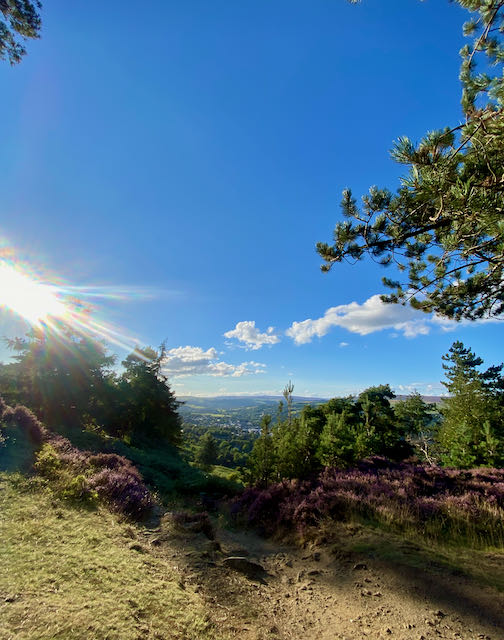
Summer evening on Ilkey Moor green leaved trees, purple heather and grasses. The Sun's rays visible on the left hand side, a few white clouds dot the bright blue sky

A hot crumpled, panicky, joint aching, bone crushing fatigue ridden, chocolate craving Tamoxifen menopausal mess

I wipe lines of sweat from my upper lip and hairline. I drown out the low daytime hum of anxiety with James Taylor on Spotify and conversations with my teens – from back to school stationery must-haves with the 13 year-old to the latest goings on in F1 with the middle child. At night-time the anxiety finds a new frequency I can’t turn off. Lying on my back I feel my body lurch – my head thinks – hallelujah, yes, sleep but only for a nanosecond before my anxiety refuses permission, bringing me back to a semi-consciousness state. Primed to drop the needle on my Greatest Hits missteps, blunders and failings.

It’s not a pretty picture. My body’s temporarily out of action furnace flares into action while my ankle joints grind, my brain short circuits and oh, the fatigue.

But it’s the predictability of the chocolate craving that I really resent and I make my teenagers accessories to my sugar crime, bringing me bars of Dairy Milk caramel before demanding payment in chocolate squares. I counter this unwelcome craving by cooking up a storm of veggie lunches and dinners. I buy and promptly forget to take joint care tablets but remember the Bach sleep remedy on my bedside table, sitting politely alongside the ever-present nightly dose of Tamoxifen and The Lincoln Highway, my latest read.

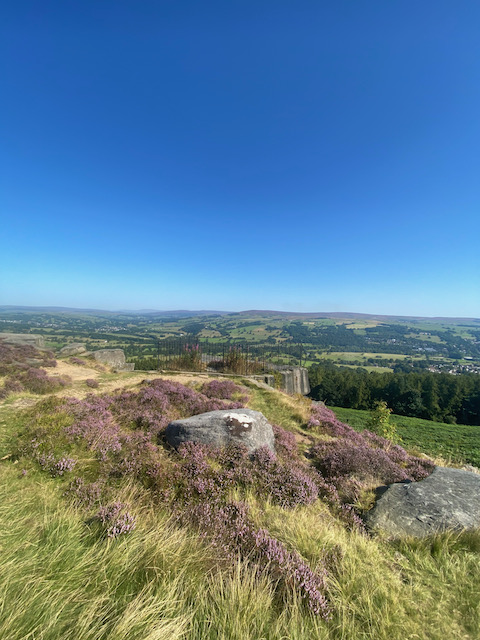
My body’s engine lurches through the hours and days before finding the right gear. I head up onto the purple carpeted moor late afternoon. The overbearing clouds of the morning have moved on and it’s blue sky all the way. A silver shimmer hovers just centimetres above the purple heather, shoulder high ferns bounce off my swinging arms as I carefully place each foot in turn along the rocky path.

I’m lighter, thanking my lucky stars that I can leave my plugged-in teens lying on their beds with a shout of ‘I’m going out for a walk, there’s food in the kitchen’ as I close the front door behind me. For so many years 5.30pm meant the chaos of dinner, bath time and are we really going to read the Gruffalo again?

Two-hours later and I’m home, restored. Smiling. New videos and photos on my iPhone a reminder that heading up to the moor is never a bad idea. The teens barely notice my return.

black and white image of a vintage typewriter

A hidden grief

‘I miss my nan’ a little 5-year-old boy said to my 19-year old son last week. He’s working as a Sports/Rugby coach at a summer holiday camp and this little boy had taken himself off to the far side of the rugby pitch in between activities. This isn’t unusual, a lot of the children wander off during the day for a variety of reasons. Charlie went over, crouched down in front of him and asked, ‘What’s up buddy?’

‘I miss my nan.’

This wasn’t what he expected to hear and he moved from his crouching position to sit down next to him.

‘I’m sorry, that’s tough. Do you want to tell me about her?’ They started to chat and Charlie found out that this boy’s nan had died a few years ago, so not recently, but that didn’t matter. What mattered was that this little boy missed his nan.

He slowly started talking and smiling as he shared some of his memories of his nan, and the conversation opened up, moving onto stories about the rest of his family. Charlie listened and wondered aloud if maybe the next time he felt sad because he was missing his nan, instead of thinking about her not being here now, maybe he could think about the times when she was, and to keep talking about her.

So many thoughts and emotions.

Fierce pride that my 19-year-old knew that the best thing he could to do was to sit by the boy’s side and listen to him. Invite him to tell him about his nan and his family. He didn’t rush him or pressure him to dry his tears and rejoin the group. He didn’t brush aside the grief. He gave it time and space.

And I just have this overwhelming vision of this grief, this loss being flushed out into the wide-open spaces of a rugby pitch. Bathed in sunlight, surrounded by big sky and moorland. This loss being freed from inside the little boy.

‘I miss my nan.’ Four short, simple words pack with emotion and meaning.

Grief is so often unseen. We hide it from view, a very private experience. Even as I write this, I’m wondering if I should. I mean it’s the summer holidays and such a sunny, hot day. Wall to wall blue sky. How can I write about something sad when it’s so sunny outside. Why would I choose to write about something that has the potential to upset me, or you.

The thing is, grief has no time for the changing seasons. It doesn’t respect your to-do list or whatever you have going on any given day.

My tears arrive unexpectedly these days, like today. I start the day feeling ok. It’s a regular Wednesday and sure, I’m a bit slow to wake up but early work call done, I head out for a solo sunny walk on the moor. I take my time, and walk over to Swastika Stone rather than my usual Rocky Valley and Cow & Calf.

One foot solidly placed in front of the other, stopping to tap and write on my phone, or drink some water. But back home, I feel the seeds of sadness and I genuinely don’t know why. I ignore my work to-do list. Nothing urgent needing my attention, I pick up my book and wander into the kitchen to make scrambled eggs on toast. A James Taylor Spotify playlist fills the kitchen and when Neil Sedaka’s ‘Laughter in the rain’ comes on, I laugh at its cheesiness which quickly turns to tears and I remember the Neil Sedaka album mum had when I was younger. I feel daft, I mean, Neil Sedaka triggering tears.

I notice that I instinctively turn my back away from the kitchen door, shielding my face and signs of sadness from anyone who might walk in. I’m alone in the kitchen, and this is my house. Surely the safest of safe places for me to cry, but the instinct to hide the tears is there. Why? Why do I feel like I’m making a fuss?

I don’t have the answer, but if you ask me about grief, death and loss I’d be the first to say that we need to be more open. Share our vulnerability. To not be afraid to say, ‘I miss mum.’ or the tears, the sadness that comes. But here I am hiding it.

I wonder if some of it is feeling able to talk freely and openly about the person who has died. Maybe that’s something we can all do, find a way to make space for us all to talk about the people we love who have died. Ask about them and give ourselves permission to simply say that we miss them.

I think there’s a lot we could learn from these two boys.

Open notebook on a white table, cream pages and a yellow pencil resting on the left hand page

The absurdity of life

It’s Tuesday morning, 8am and I’m sitting at my desk, an Ikea table covered with a marble effect covering. Black faux leather office chair awkwardly sliding on a pink rug. Navy walls adorned with photos and prints. My desk looks out onto the trees that surround our house. I’m just off the hallway and front door, and my 13-year old daughter wanders in for a quick chat, putting off leaving for school until she absolutely has to.

It’s also the summer solstice. A quick scan of my socials shows photos of rosy cheeked, glowing faces after the open air, summer solstice swim at Ilkley Lido. The lido a flash of turquoise blue in a town that’s all about brooding Yorkshire stone and moorland.

But I don’t swim. I love the idea, but never quite get round to it. So I’m here instead, my own 8am ritual. Mug of tea, pencils, my Agenzio notebook from Paperchase, perfect for this left handed scribbler and I join the 8am Zoom Writers Hour. I love hearing the cacophony of voices calling out greetings as we each join the several hundred strong group, I join them with what I hope is a cheery ‘Morning’ and I can’t not smile.

I’m fully prepared to write my Morning Pages but my ears prick up when I hear that this morning’s Words of Wisdom are by Anne Lammott. I adore Bird by bird, the book I wish I’d written and the source of today’s Words of wisdom . My battered, dog eared copy is covered in tiny blue stickies, marking out passages and pages I want to refer back to.

We are given a shot at dancing with, or at least clapping along with, the absurdity of life, instead of being squashed by it over and over again. 

Anne Lammott, Bird by bird

This line, I mean all the lines, but you know that moment when you hear or read something and just start nodding your head. Because that person has just articulated what you’re feeling, even though you didn’t realise that was what or how you were feeling. 

The absurdity of life, that’s what it is and what, in my own little way I’m trying to do here, but I’ve been doing it behind the scenes. I’ve been quietly, furiously scribbling away in my notebook for months trying to locate the words and phrases that would adequately, honestly, accurately reflect the maelstrom of emotions that I’ve felt over the past few years.

It’s not easy. We’re conditioned to keep on going. To find a way through. To be positive. Resilient. And I found I didn’t have the words. A friend read a draft of my first chapter of my memoir. Her reply, ‘I have a much clearer insight into what it was like for you being diagnosed with cancer. I just want to know how you were feeling.’

I smiled when I read this, writers in my online writing group said the same. As did the tutor from the memoir writing course I completed earlier this year.

I realise I have a human problem, not a writing problem. But how did you feel? I don’t know is the answer. I’m tired or I’m fine all too often the go-to phrases when asked ‘How are you?’

I start free writing, scribbling furiously during Writers Hour. I download an emotions wheel, staring blankly at it. Dismayed? Indignant? Detestable?

It’s the gap I’m interested in, why the distance between the way I felt on the inside and the person I portrayed to the outside world. The tight lipped smile barely masking the anger, frustration, guilt. Sadness. Sadness that life can be this hard.

So that’s why I’m writing. To try and find the words to help me, and you never know, may be they’ll help you too. I don’t really want to feel like I’m doing this on my own. 

Because I know that what I’ve experienced isn’t unique to me. Cancer, grief, illness, relocation, redundancy. Family life. We’re all trying to navigate our way through the best we can. It’s just that so often the messier emotions are buried deep, we can’t let them out too often or they get in the way of the one day at a time, carrying on mantra. But they can’t stay there for ever. They will find a way out.