Tag Archives: life after cancer

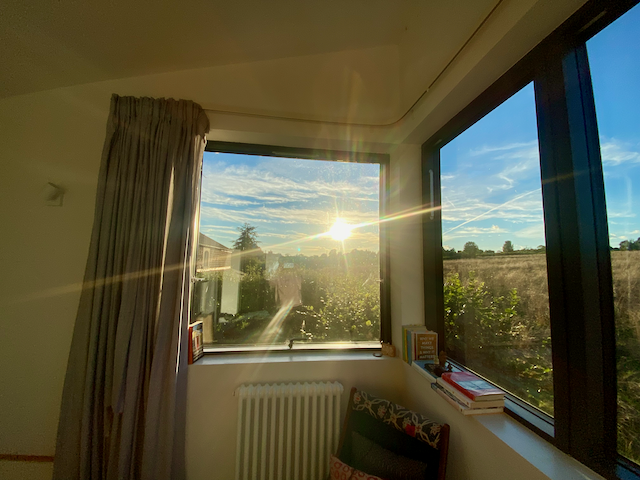
Sun rays on the left of the image over lush green moorland and a deep blue Spring sky

Feeling at home in my body

Is one of the reasons I’ve struggled to feel at home – not just here in Yorkshire but from my twenties onwards – because I haven’t felt at home in my body and in myself?

Sun rays on the left of the image over lush green moorland and a deep blue Spring sky

H.O.M.E.

Home. This short word, these four little letters have occupied a lot of headspace these past few weeks following my last post and various conversations, especially with Lindsay Johnstone who writes What Now? and other writers on her Memoir in a Month course. (I’d highly recommend it, she’s running another in September if you’re interested).

There’s been a lot of scrapbook writing. Odd thoughts tapped into Notes on my phone as I walk into town, sentences half heartedly strung together in my notebook and the occasional flick through the photo album.

There’s also been a lot of not-writing writing. The writing that happens while washing up and doing all the other life stuff like making parent’s evening appointments and picking up yet more milk from Tesco.

I try to capture these fleeting thoughts and ideas, but the longer I leave it between posts the harder it is to pull them together into something that makes sense. I made a commitment to myself and to you though, to write regularly. Or rather to share my writing regularly so that’s what I’ll do. I’ll put on my writing playlist, sit down with a cup of tea and see where the writing takes me. Bear with…

Feeling at home in my body

Later this afternoon I’ll be driving along the A65 to Airedale Hospital for my annual mammogram. Six years post-diagnosis, five year after finishing treatment my scanxiety, that knot in my stomach, tends to surface around halfway through the drive to the hospital rather than in the days before as it used to.

It appears somewhere between Addingham and Silsden but disappears the closer I get to Aldi, distracted as I work out if I have time to pop in before my appointment and have a rummage through the special aisles, or not. Stopping at Aldi and picking up flowers and brioche (not to mention cushions and candles) was as much part of my cancer routine as the weekly PICC line flushes, blood tests and scans.

The mammogram appointment letter arrived a few weeks ago, around the same time I found out I could stop taking Tamoxifen, a friend was diagnosed with breast cancer, bumping into a woman I’d met in the chemo lounge years earlier but not seen since, and Mother’s Day.

Mother’s Day, the ninth since mum died, passed in a blur of grey sky and rain. I’d been silently congratulating myself on feeling fine about it even though I’d been surrounded by Mother’s Day cards and gifts at work. I was surprised then to feel so wonky on the day, much as I had last year.

Spring is a strange season. I mean it’s very welcome with its blossom, lighter afternoons and lush foliage and all those signs of regeneration and growth but it’s also the season of mum’s death, as well as my annual mammogram which brings memories of my diagnosis to the fore all juxtaposed with the joy of childrens’ and Andy’s birthdays.

The final fraying thread connecting me to cancer

The thing with being told I could stop taking Tamoxifen is that it was the final, fraying thread tying me to breast cancer. A little over five years of daily pill taking. It had plunged me into chemical menopause overnight, the last line of defence in the treatment plan for my oestrogen positive, ductal invasive breast cancer. I thought five years of pill popping might call for more than the brief text message.

“Hi Mrs Mason
The specialist advised a 5 year course for your Tamoxifen
so this can now be stopped.”

I called the breast cancer nurse who confirmed the text was correct. I asked if I could expect any side effects as I had when I first started taking it, ‘Oh, I don’t know’ she said, and our conversation was over.

And so I found myself in tears in front of the GP the other Friday afternoon. I’d made the appointment after feeling some pelvic pain in the days after I stopped taking Tamoxifen. Discomfort and pain that disappeared as the appointment got closer and I came close to cancelling because I wasn’t ill, was I.

I didn’t want to use up an appointment for no good reason but I also felt that there needed to be, or rather I needed some sort of conversation with a human being to acknowledge that treatment had finished, that I was done.

I didn’t ring the bell in the chemotherapy or radiotherapy waiting rooms after my final appointments. A bell was too loud, too public. The clanging of metal on metal too harsh, and it didn’t feel like anything was over. I guess it wasn’t over, not only because I was on Tamoxifen but also because there’s something insidious about cancer. It can stay with you long after the hospital appointments disappear from your diary.

I guess it’s also worth adding that I’d also spent the morning before seeing the GP with the recently diagnosed friend and was surprised at how emotional I felt as I drove away from her.

Do you talk about it?

The GP was fabulous, she listened, passed me tissues and gently asked if I ever talked about my breast cancer. I paused, and realised that no, I don’t think I do talk about it. Much like I don’t often talk about how I miss mum. I don’t think I mentioned her at all on Mother’s Day which seems really odd now that I see it written down.

With the cancer, I might reference it, as in this thing happened but that six years post diagnosis I didn’t think I had a right to talk about it anymore. I was fine, wasn’t I? Time to move on and continue the forward facing position I’d adopted.

I apologised for using up the GP’s time and told her that I almost cancelled. She put me straight and we agreed that I was probably overdue a return visit to Maggie’s cancer centre for a chat.

I think I hesitated in answering the GP’s question about whether I talk about cancer because I recognise this habit I have of talking and writing a lot of words but not necessarily sharing how I feel.

Or at least only wanting to share feelings that are somehow appropriate and acceptable.

I also hesitated in writing this post because I don’t want to sound like I’m moaning. I know I’m six years down the line, that my cancer was common and with good outcomes and I’m still here, fit and healthy.

I’d also been persuading myself that I should be writing about ‘home’ after my last post, but I’ve found it hard to string my thoughts together into anything that makes sense. I think I also came to the realisation that it’s all connected anyway.

Feeling at home in your body

I suspect that one of the reasons I’ve struggled to feel at home – not just in Yorkshire now I think about it – but from my twenties onwards is because I haven’t felt at home in my body, or in myself. From shingles and post viral illnesses to ME/chronic fatigue and fibromyalgia and cancer. The signs have been there, the body knows the score indeed, it’s just that I haven’t been listening properly.

Because how can you feel at home, knit and weave yourself into a landscape and community if you don’t know yourself. If you aren’t paying attention, listening, acknowledging what’s really going on inside?

And I guess as I’ve hinted at here, it’s not just the cancer. It’s what came before it. Stripping out and naming the emotions linked to each individual event is hard, impossible even and while for the most part I walk through life happy, content even there are times when I feel its weight creep up on me.

I get out daily, and take my vitamin D. I walk on the moor and go to Pilates, stretching my body at home too. I love the jolts of energy and colour that working my shifts at Oliver Bonas brings as well as writing for my clients not to mention chats with friends and family, but that can all be true whilst still feeling the heaviness. 

We need safe spaces to explore our complicated emotions

I hope that what I’m creating here in Gently Does It is a safe space not just for me to share and explore these themes and feelings, but for you too. I loved reading the comments following the last post and I guess it shows that many of us are walking around harbouring these conflicting and sometimes confusing emotions.

I’ve included a few of the articles, books and podcasts I’ve found useful over the past few weeks as I’ve been thinking about feeling at home in my body (and anywhere else for that matter). I hope you find something interesting and/or helpful there too.


And with that I’ll leave you in peace. Thank you for reading, the comments are always open and I’ll be here reading and ready to reply. If you’re not a Substack-er simply hit reply to the email and message me directly.

Harriet

Something to read

  1. Nervous system regulation isn’t everything, All Parts by Eliza Butler on Substack

“Trauma leads to disorganization in the various systems of the body, which causes the body to work even harder to find any semblance of coherence. For some who have experienced trauma, you might feel like an entire section of your orchestra has betrayed you and left the building; another person might feel like a few instruments are out of pitch. Either way, our bodies learn how to play the music the best we can given our situation.”


  1. I’m longing to return to the place we used to live but is this still nostalgia? Annalisa Barbieri in The Guardian

“Nowhere is perfect. Is it really the old place you’re longing for, or just the fear of permanence where you currently live?”


  1. On moving: a writer’s meditation on new houses, old haunts and finding home again, Louise de Salvo

“In the moves I imagine myself making, I’m always in a perfect place. A house that doesn’t leak during heavy rains. One with no musty smells in the basement. One without walls that crack and need repair. A home without a filthy oven that needs cleaning. A place where there will be no health problems, no marital problems, no financial woes, no income tax, no work that feels banal and boring.’“

Louise de Salvo, On Moving: a writer’s meditation on new houses, old haunts and finding home again


Something to listen to

What does it mean to belong? Conversations with Annalisa Barbieri featuring psychotherapist Mark Vahrmeyer

“We also look at how important attachment is in determining how much we feel we belong, or don’t. How self esteem also impacts and how very important human connection is to psychologically tether us to a sense of belonging. We also look at why you might feel you don’t belong in the very place you think you might have an automatic right to –  your own family.”
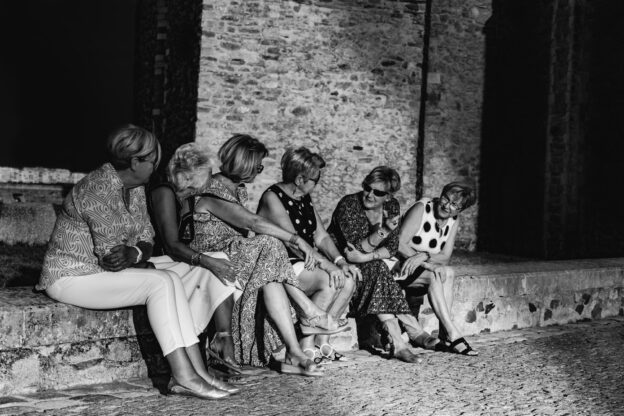
Black and white photo of a group of six women sitting on a low stone wall heads turned to each other in what looks like amiable conversation

The conversational dance

Thoughts from the shop floor where we’re celebrating the warmth and humanity of female friendships, conversation and embracing mistake-making.

Dear reader, how are you this festive December?

It’s six (may be seven) shifts since I last wrote to you – forgive me – but if you don’t mind I’ll swap reciting a couple of Hail Marys and an Our Father at the back of church as penance for a couple of hours doing the daily restock under the fluorescent strip lights in the OB stock room.


I’m what three, may be four weeks into this job and I suspect my face says it all when answering, ‘how’s it going, are you enjoying it?’

Normally I’m a sit on the fence kinda gal, happily hedging my bets, seeing all angles of a question, not wanting to risk offending anyone but in this case the answer is an easy, emphatic, genuine head nodding yes. The only downside I can see right now is that it’ll come to an end at the end of the first week in January.

As a friend commented the other week. ‘What’s not to love Harriet. It’s all layers of loveliness isn’t it. Lovely products, lovely colleagues and lovely customers.’

In terms of all the decisions I’ve made this year, I think that deciding to apply for this job is up there as one of my best.


It is fun, but I don’t think I fully appreciated how much of a workout it would be for my brain. There are parts of it that are being exercised like never before and one happy consequence of all of this is that it’s helped me to get comfortable with asking for help (a lot) and making (many) mistakes.

Because my God, there are a lot of processes and there’s a lot to remember, even with what seem like the simplest of purchases.


“Can I take that for you? Is it a gift? Do you want me to take the price off? Do you need a bag, they’re 10p. Is that ok? Do you need it wrapping in tissue paper? We can put the jewellery in a little pouch for you? Are you paying by card? Yes, we offer a Blue Light Card discount. Can I take your email address and email the receipt to you? Do you get our newsletter? Do you need a gift receipt?”


All while remembering to breathe and maintaining just enough smiling eye contact so that the customer doesn’t think I’m ignoring them as they wave their card in the general vicinity of the card machine wondering why it isn’t allowing them to tap and go, not realising the screen I’m looking at needs a few more taps before the satisfying beep tells us the transaction has gone through.

Oh and there’s remembering to remove the security tag from clothes and handbags not to mention returns, gift receipts, click and collect, back stocks and re-stocks.


I’ve been on enthusiastic nodding terms with Elizabeth Day’s ‘How to fail’ podcast (loved this episode with Dawn French) for yonks and always happy to chat about the merits of having a learning mindset.

But there’s nothing like putting yourself in a situation where you know nothing to test how comfortable you are with making mistakes, asking for help and saying ‘I don’t know’ (but I’m sure I can find out).

It’s been a great way to dial down some of the daft (and unrealistic) expectations I often have of myself, and generally take a breath and worry less.


‘It’s muscle memory, you’re doing brilliantly and honestly you’ll soon just be tapping away without thinking, and one of us will always be here. You won’t do anything that can’t be undone’.

My colleagues have way more confidence in me than I have in myself.


The conversation dance

It’s the conversational dances I love though, once I’ve remembered to rearrange my face into (what I hope is) my gentle, welcoming resting smiling face rather than my usual resting confused face or resting ‘where have I put my glasses?’ face.

Sometimes it feels like OB is a confessional for female friendships and relationships. Young teen daughters telling me the candle is a birthday present for their mum and they think their aunt would love the little dachshund shaped sticky notepads.

The aunt hesitating over which slender silver bangle to buy for their niece before deciding it might be safer to check with the mum first. Adult daughters buying scarves for their mothers and the grandmother-daughter pair who joined forces to buy a dress for the 18-year-old (grand) daughter to wear to a party celebrating the grandmother’s 60th wedding anniversary.

The ‘I’m looking for a piece of jewellery for a friend, something with a star on because she’s been an absolute star supporting me this year.’

The woman in her sixties hovering by the glass fronted jewellery cabinet who shyly tells me that she’s recently come into a small amount of money. ‘My Godmother died, and she left me some money. I can’t quite believe that she remembered me so I want to buy something special, something I wouldn’t normally buy.’

The impish steel grey pixie haired woman that I, at all of my 5 foot 5 towered over, who asks me what I think about a pair of gold pated hoop earrings with a pearl. ‘They’re for a friend, she’s, well….how can I describe her. We’re quite different. I love dangly glittery earrings and she only ever wears simple studs and I really want her to be a little more adventurous, what do you think of these?’

Women shopping solo, in pairs and in groups, pushing grandchildren in buggies, holding bags and exchanging honest opinions in the changing room.

Non-stop chatting, laughing, heads leaning in to listen, brows furrowed in concentration as they walk through the door. Small groupings form naturally in the aisles as conversation is prioritised over shopping.

And the women who whisper a quiet, embarrassed almost, ‘oh no, they’re not a gift, they’re for me’ when asked if they want the handbag/belt/wallet/dress/scarf wrapped and the price removing. I celebrate those purchases with as much, if not more gusto than a purchase made for someone else.


So yes, there are delicate champagne flutes, handbags with changeable straps, silver hooped earrings and hot pink and green scarves. And yes, there’s the mid-afternoon restock where I disappear into the stock room dungeon with a computer print-out, black biro and over sized white version of the blue IKEA shopping bag to retrieve products that need to find their way onto the shop floor. But really – and here comes the cliche – it’s the privilege and joy of being allowed these teeny, tiny glimpses into peoples’ lives and relationships.

And when the headlines are one long list of humanity at its worst, these micro moments are a salient, timely reminder that this world is also full of kind, thoughtful, caring humans.


I’m not working today or tomorrow (Friday or Saturday) and last night was our Christmas meal (tapas and sangria – yes please thank you very much) but I’m back in on Sunday afternoon for more smiling, chatting and squinting at the restock print out.

I’ll leave it there though or this will end up as yet another post left languishing in drafts. It seems I have no problem writing words, it’s just that I struggle knowing when to stop and share them, as evidenced bythe overflowing drafts folder on my Mac and scribbles in my many notebooks.

I’m hoping (no pressure) that the Reset writing course with

Chris & Bec in January will help me to unravel that sticking point and clarify where I want to focus my writing energy next year.


Whatever I end up writing though I want to bring across some of the making mistakes, dialling down expectations, asking for help energy that I’ve been inhaling these past few weeks.

That’s for next year though. Right now I’ll leave you with the simple wish that your Christmas and end of year/New Year plans are coming together smoothly and that you can find a happy balance of conversation, quiet, mince pies and fresh air.

Thanks for reading, Harriet

A dark brown wood piano is set against a cream, pale painted wall with paintings and pictures on it. The piano has a globe on the right handside and two piano stools. It's a traditional looking piano.

Finding my own meandering writing path

Being open to a little redirection and adopting a gentle ‘what happens if I try this instead’ approach.

My favourite spot to sit in the kitchen is on the sofa opposite our kitchen door. It opens onto the landing and the top of the stairs, the middle of our strange upside down house. It’s the perfect spot for watching all the comings and goings.

It also faces the piano, yet despite having played the piano from the age of seven to 18, weekly lessons, competitions, recitals and the like and always having a piano in the home, how often do I sit down to play, even a few simple scales.

Rarely, is the answer.

Around twice a year I might rifle through the piano music gathering dust on the shelves alongside our vinyl collection and choose a couple of pieces to leave propped open – currently Carol King’s Tapestry and Elgar’s Salut d’Amour – more in hope than expectation that they’ll draw me off the sofa and over to the piano stool.

I don’t know why this is. Why would I choose to slouch on the kitchen sofa and doom scroll over attempting the crashing chords and opening bars of ‘I feel the earth move’ or even a few simple scales.


I was nudged into action before Christmas though after an unexpected encounter with my old violin teacher, Lucy. More family friend than violin teacher, she was a constant, charismatic presence in our family for years and I hadn’t seen her for ages.

She taught both me and my sister Louise the violin, mum the ever present supportive parent and quasi older sister to Lucy.

I started learning the violin when I was about five because in a classic youngest child move I’d seen Louise being taught and fancied a piece of the action. Lucy would land on our front door on a Saturday morning, a chaos of violin cases, bags bursting with music ready to teach a steady stream of children before meeting up again after lunch at the music school in St. Albans for group lessons.

She introduced us to the Suzuki method which felt revolutionary with its emphasis on listening, observing others, practice – individual and group – and playing in public.

I saw her face registering sadness as she heard my mumbled response of ‘No’ to her ‘But you do still play the violin though? No? The viola? What about the piano. Tell me you sing at least Harriet?’

I love music. I play music all the time – I have a writing soundtrack that leans heavily on Ella Fitzgerald and Oscar Peterson. I’ll play Bach’s Concerto for two violins knowing that there’s a good chance it’ll make me cry. It’s in Suzuki’s Book 4 and other than copying Louise the main reason I wanted to learn the violin, but for reasons I’ll explain another day, didn’t happen.

I’ll listen to Bach’s Mass in B Minor because it reminds me of mum, even though I don’t know if she ever sang it in any of her choirs. I love Stevie Wonder, Aretha Franklin and have a thing right now for Simon and Garfunkel’s The only living boy in New York.

I share playlists with the children, and there are days where we silence Alexa and Spotify, preferring the drop of the needle onto vinyl on the turntable, even if it does mean eating Sunday roast while listening to a mournful Thom Yorke and Radiohead – my 18 year old’s choice.


Somewhere along the line though I became someone who only listened to music but since bumping into Lucy I’ve started playing the piano again.

My left hand tends to lag a beat behind my right hand, my brain struggling to read and process the bass clef as easily as the treble clef. My right hand slipping back into life on the keyboard with ease.

I guess the muscle memory is there, it’s just a little weak (to say the least) but I love it. I love the feeling of my fingers stretching across the keys, the sound I can create simply by pressing my finger down on a white or black key and my body moving with the music.

Pure joy and I can’t ignore how I feel it connects me to mum. She might not be here anymore but boy I feel her presence in so many ways and music is one.


That exchange with Lucy was the nudge I needed. I’d started to realise that so much (too much?) of my life was centred on words. I’d added writing to my reading habit. Writing used to be part of my job, then it became 100% of it. Then I started the therapeutic writing which then gave birth to the memoir writing project.

Even going for head clearing walks on the moor would be peppered with pauses to not only take photos of the sky but also tapping all the thoughts that big old sky had triggered into my Notes App.

I’d written myself to a standstill.


I then bought Jake Spicer’s ‘You will be able to draw by the end of this book’ when I popped into Salts Mill just after Christmas. I’ve never seen myself as being creative in that way, despite growing up surrounded with mum’s art, but I’d clocked the learn to draw/paint/sketch books on previous visits and this time thought, why not.

It’s still a pencil and paper but it forces me to pay attention in a way that I don’t normally, my eyes programmed to slide down the screen or paper.

And yep, mum. Again.


Was I done writing?

Short answer – I thought I was done but it turns out I’m not.

Longer answer – I’d set myself the challenge of finishing the first messy draft of my memoir by the end of 2023, I even wrote about it in Time to get my writing act together but I discovered that simply writing ‘Write about dad’s funeral’ or ‘Write chapter about starting chemo and losing my hair’ in my diary wasn’t enough to make it happen.

I was going through the writing motions but it was hard work and I hankered after past writing sessions where the dam burst across my notebook, pages soaked with words and feelings. I craved that feeling of catharsis and wondered if I’d written everything I needed to write.

I told myself that I could stop if I wanted to. I figured that working in Oliver Bonas over Christmas and New Year gave me a valid reason for pausing the project as well as something else to think about. Working outside the home was and still is a welcome distraction and an offer to stay on permanently accepted with almost indecent haste, ‘No really, I don’t need to think about it, it’s a yes from me.’


Silencing the writing chatter and not trying to get a book deal

I think what started out as simply me and my notebook at some point turned into a writing monster that I was fuelling by reading too many posts and articles about how to write, how not to write. How to grow your likes, engagement and followers. How to write a book proposal, how to land an agent, writers block – myth or reality?

It’s amazing how all the articles purporting to help ‘find your voice’ led to me losing mine.

It’s why I’ve turned to

Chris & Bec and their Writing Reset course and

Lindsay Johnstone and her Tuesday evening ‘Writing for mental and physical health’ workshops to help me find my writing path again. The rest is up to me…


Unfinished thinking and a gentle curiosity

If you’ve got this far, thank you. This has been one of those posts that started in one place hit a dead end, doubled back, took another turn and if I don’t hit send soon who knows where it’ll end up or if I’ll ever finish it.

I sometimes think I don’t have a problem writing, it’s more of a sharing what I write problem.

It might feel a little unfinished in its thinking but I hope that what comes across is unfinished in a gentle and curious way.

Thank you as always for reading,

Harriet

PS As ever, please forgive any typos and errors, I need to stop fiddling with this and hit send!

Traditional shop front, central door with large windows either side with lots of light fittings and lampshades. The woodwork is all a mid blue and there's a black traditional bicycle parked outside the shop

Swapping the notebook for the shopfloor

I’m swapping my navy walled home office for manning the till, tidying shelves and chatting with customers. I loved my first shift on the shop floor, let’s see how I feel after Black Friday weekend.

Hello! Welcome, come on in out of the cold, how are you this Black Friday weekend? Throwing yourself into the fray or hiding behind the cushions? I’m normally wedged on the sofa at this point, fingers in ears all la-la-la-la, ignoring the madness.

But this Saturday afternoon – Black Friday weekend and Ilkley Christmas lights switch on – I’ll be working my second shift in Oliver Bonas. Yep, I’ve got myself a job that means leaving the house and working with people in real life.

And here’s the thing, walking home after my first shift on Tuesday afternoon I felt a definite un-autumny/wintery like spring in my step. I’d spent several hours being shown how to use the till, ‘it’s really easy when you know how’, had an in-depth tour of the shop, its products and cavernous basement stock room.

I’d practiced wrapping products and chatted with a woman visiting from out of town. She’d bought this vibrant pink fan-patterned skirt in her local store a few weeks before but liked the look of this navy long sleeve top to go with it.

I spotted a friend twirling the greeting cards stands and popped over to say hello. ‘How lovely to work somewhere where you’re surrounded by lovely things,’ she said. Our noses twitched towards the shelves of scented candles and she whispered, ‘you know, this is great but I’ve always fancied working in Betty’s’.

I guided a woman to a mirror in a quiet corner of the store so she could try on some sparkly hair slides unobserved. I released my inner neat freak and tidied shelves of mugs, scarves and candles, and straightened clothes on hangers. I smiled with the couple having a little sing and shoulder shrug when they heard Sister Sledge playing.

I felt like you do when you turn up the brightness on your phone and it felt joyous.


I’ve been in a quiet phase freelance writing wise after hitting the buffers in the summer, the diary a lot emptier after cutting ties with my biggest client before our Scottish summer holiday.

I’d been ignoring the patches of eczema on my left cheek for too long and it was too easy to blame my interrupted sleep on menopause rather than the fatigue and anxiety brought on by the mental gymnastics involved in writing for a (lovely) client based partly in Australia, partly in the UK, with clients spread across the world.

Others might have coped better with the increasing workload, screen conversations and time zone differences, but I could feel myself slipping into chronic fatigue mode, and the breaks I’d put in place to recharge weren’t enough.

My words and ideas were going stale. I was snappy and irritable, prone to teary outbreaks and had to admit that even though I’m five years post-cancer and my chronic fatigue / fibromyalgia has disappeared – officially at least – both have left their imprint.

I used to get annoyed with my rollercoaster fatigue levels, exacerbated at this time of year when Vitamin D mostly comes in capsule form, but getting annoyed doesn’t help.

I have to accept that my fatigue – all heavy, tingling limbs, my brain a black hole where words and ideas vanish and forget making even the simplest of decisions – is triggered far more quickly and easily than others and adapt my working and home life accordingly.

Comparing myself to others is pointless and I have to remind myself that mental fatigue can be so much more debilitating than a burpee heavy HiT session on a Monday morning.


Maybe having a mix of jobs is the way to go right now, maybe I need a different type of flexible working, one that doesn’t involve working exclusively for myself and from home. Maybe having a job with clearer physical and mental boundaries is better for me. I love writing, but it’s no respecter of boundaries.

Other than a year-long stint as a special educational needs teaching assistant in 2016 cut short when we moved to Ilkley, I’ve worked for myself and from home since January 2008. It’s allowed me to flex with the kids schooling, relocations and illness.

But I remember how much I loved those afternoons wandering through the school corridors with a child who couldn’t, wouldn’t, shouldn’t be made to sit neatly in the classroom. They loved the world map near reception, pointing to countries they’d visited, especially the farm in their father’s home country where their grandparents lived. They came alive when talking about feeding the chickens and goats, before running off round the corner with me in hot pursuit.

I loved seeing them root through the bookshelves finding books they’d want to read, anything with food in it was a win. We’d head to the small garden in a corner of the playground or find a table and chair to play with Lego.

I loved the hard start and stop to my working hours – you can’t argue with a clanging school bell – and the unpredictability of walking into a classroom partway through the day and never quite knowing what had gone before or was about to happen.

Working every afternoon gave my weekdays structure and were a temporary distraction from the grief of mum and dad’s deaths. The job coming at a point where I was in rebuild mode, working my way out of peak grief and putting down roots in our new home town, Bournemouth. Those afternoons in school gave me purpose and I felt my confidence quietly growing week on week.


I’m in a different place now – literally and emotionally – but it’s funny how these things stay with you. Even going through the interview process at Oliver Bonas was a confidence boost, discovering that they valued all that messy and complicated work and life experience far more than having worked a till before (although me not being scared of the till would be a bonus). Sometimes change is good.

The job is only until the first week of January and a few afternoons a week, so there’s still time for me keep my freelance writing ticking over too. But it’s sparked something in me so let’s see where I go with it.


I figure the micro moments I’ll spend with customers and colleagues are just the glimmers I need, and I know I’m not alone. It’s not surprising that we’re craving light and warmth and pockets of joy and connection right now, is it?

So maybe, find a place where you can engage all the senses, wrap yourself in all the textures and colours, inhale the scented candles and diffusers. Brush your hands across soft wool jumpers and scarves and just breathe, even if it’s for a few minutes. 

Thanks for reading, Harriet

Whitley Bay lighthouse against a blue sky

The restorative power of a seaside circuit breaker

Six years after swapping coast for moorland I still feel the gravitational pull of the sea and the soothing rhythm of a beach walk.

I’ve been feeling a little I don’t know, autumn-y but not in the crisp blue sky and crunchy orange leaves kind of way. More grey and claustrophobic. The moor heavy, looming especially on repetitively dank October days.

I needed a seaside circuit breaker, but while my 14-year-old showed me photos of her friends in Spain this October half term, we headed to Spanish City in Whitley Bay via lunch with her brother in Newcastle for a blast of north sea air. Bracing.

Six years after moving to Ilkley from Bournemouth’s golden sandy beaches, I still feel the gravitational pull of the sea as strongly as ever. We (only) lived there for three years, half as long as we’ve been in Ilkley and far less than Bath, the city we’d moved from, but I quickly learned to love the simplicity of those beach walks. Daily circuit breakers on tap.

The beach was an easy five-minute walk from our front door, and the choice simple when we got there: walk east towards Bournemouth Pier, west towards Sandbanks or pause at Vesuvio and decide over a coffee on the terrace. I knew that whichever direction I chose, the sea, sky and beach huts would be there leaving me free to watch the shape shifting clouds and calm my nervous system.

Because we’d been there less than a year when mum died in May 2015, followed by grandma, her mother, in the August and dad a month later. Both parents and our last remaining grandparent gone in a few short months. Daily walks with Bella, our yellow labrador on the beach were already part of my routine but I think it was after dad’s funeral in the October that there was a shift.

I started having panic attacks. Rapid breaths and punches to the solar plexus would knock me to my haunches and I’d feel an overwhelming urge to get out of the house. To march down to the sea, knowing that my shallow, rapid breathing would slowly fall into a soothing beat in time with my moving feet, a steady four-four rhythm.

Gentle but with enough movement to stop whatever I was feeling from lingering in my body for too long.

I was also a couple of years into a chronic fatigue and fibromyalgia diagnosis and while my symptoms had alleviated – I was out of the sleeping 20 hours a day phase – and I could function, as long as I had fresh air and a sizeable siesta before school pick up (Charlie was 12, Ollie ten and Saskia six). But the additional layer of grief was threatening to tip me over to I don’t know where.

The rhythm of those morning walks with Bella became my bass line, a beat to keep me moving. I’d repeat mum and dad’s ‘one day at a time’ mantra as I walked, asking Bella ‘are we going left or right today?’ knowing that nine times out of ten we’d turn right and head towards Branksome Dene and Canford Cliffs. The white of Old Harry Rocks in the distance beyond Poole harbour, Sandbanks just tucked out of view. And we’d walk.

Walking in straight lines along the prom, picking out beach huts or cafes as markers to stop and turn around made these excursions with Bella easy when life felt anything but.

Because I felt utterly unmoored. This new home not yet familiar enough, new friendships not evolved enough to withstand this grief and my family foundations gone. But this landscape, the soft calm blues, greys and whites of the sea and sky, punctuated by lines of rainbow coloured beach huts was where I felt calm.

I started to see the same dog walkers each morning. I was on first name terms with the dogs, smiling and nodding terms with the owners and there was that small group of older middle-aged men who’d meet every morning at a beach hut at Branksome Dene Chine. I’d see them on my outward leg as they were chucking off their layers, running across the prom and sand into the sea, their chatting voices just heard above the waves. By the time I was heading back towards Alum Chine they’d be back at their beach huts flasks in hand, still chatting.

Hark, now hear the sailors cry,
Smell the sea, and feel the sky,
Let your soul and spirit fly, into the mystic.

Into the Mystic, Van Morrison

One of the group disappeared for a while and I wondered what had happened, my catastrophising brain coming up with all the scenarios, until one day he was back, now sitting in a wheelchair. I watched as the other men carefully lift him up and making a chair with their arms, gently carried him into the sea for a quick dip before returning to dry land. Such tenderness, friendship was beautiful.

We have no thoughts of moving from Ilkley, we’ve been here for six year and despite the tricky start of finding somewhere to live, breast cancer and Covid in the first few years I love it here, I love walking on the moor and it feels like home.

I used to love the flat walks along the prom, the certainty of placing my feet on the robust concrete surface, sometimes swapping for softer sand. It’s all uneven steps, rocks and sometimes slippery slopes here though. I think carefully about where I place my feet when I’m on the moor, and an abundance of paths to choose from depending on my mood and energy levels.

And the colours and textures too, it’s burnt copper ferns, orange leaves and grey-white sheep camouflaged as rocks right now, but then there’s the purple heather, blonde grasses and all the shades of green the rest of the year. It’s always changing but I do have favourite trees, little landmarks I like to check in on depending on the walk I’m doing.

Sometimes I crave the simplicity of those beach walks and head to the tarn or the riverside and walk laps. A flatter surface, water too, but it’s not the sea.

It’s interesting that in the last two visualisation exercises in the goal-setting workshops with London Writers Salon I’ve pictured myself in a whitewashed single storey home, large desk in front of floor to ceiling windows looking out to sea. It’s reminiscent not of our Bournemouth beach though, but the north east coast. These are my seaside circuit breakers now. Day trips to Saltburn-by-the-sea with its crayon-coloured beach huts, old school pier, fish and chips and crazy golf.

I love Seahouses and Beadnell Bay on the Northumberland coast too and then there’s Nairn and the highlands, this year’s summer escape, but for this half term a circuit breaker in Whitley Bay will more than do.

I started writing this when we got back from Whitley Bay, coming up with its shape, the things – roughly – I wanted to write in my head, but it’s proved harder to write than I thought. Our time in Bournemouth was challenging, the grief overwhelming even if the landscape was healing. But we left abruptly and I’ll never know how our life would have evolved if we’d had more time there.

Maybe there’s also a hint of ‘I can’t believe we left that behind’ that I don’t want to look at too closely. The move to Bournemouth from Bath and then from Bournemouth to Ilkley, both triggered by redundancy, are huge pivot points in my family story, overlaid with grief and loss and ill health.

Maybe going back to those years and re-engaging with those emotions and decisions is forcing me to shine a light on a period I’ve been happy to park, relegating it to wistful sighs over photos of the blue sky and sandy beaches, ignoring how much there is to unpack. Whatever it is, it tells me I need to keep writing it out and see where it takes me. So forgive me if this doesn’t flow, or there are gaps. It’s all a work in progress.

Memoir Watch: 90,000 words and counting

The good news is that I have a little under 90,000 words in Scrivener (the programme a lot of writers use to manage the book writing process) sorted into around 10 chapters.

I’m playing all the right notes but not necessarily in the right order

Eric Morecambe

The bad news is that while I have a lot of words written, they’re not necessarily the right ones or in the right order. It feels pretty lumpy at the moment. Too much focus on the ‘what happened’ in some areas, not enough ‘so what’ across the piece and some parts of the story barely touched but at least I know what I’m dealing with now. I ‘just’ need to keep going and I thank you for your messages of support, it does help!

With thanks as ever for reading, and please share your circuit breakers, beach or otherwise. I’ll be back in a few weeks and might even get round to a few book reviews! Harriet

Birds eye view of a wood desk with the corner of a laptop just seen on the left, a diary open on November with a pen and pencil lying on it, and a group of four small orange pumpkins.

A month of settling

November was a month of settling into the dark afternoons and dark mornings. Settling into coats, hats and scarves. Settling into the rhythm of talking to a counsellor once a week

It’s been a month of letting thoughts and ideas gently drift and settle somewhere in and around me. Every Monday for the past seven weeks I’ve sat down with a counsellor and over the course of an hour we’ve talked. I’ve talked, she’s listened. She’s talked and I’ve listened. I can’t say that I look forward to the sessions exactly, but they’re part and parcel of my Monday now. I do feel better, clearer as I put my coat back on and walk home through town, and I know I’m feeling the benefit.

I can’t be too specific about what that benefit is yet because the conversations are leading me to rethink and reframe how I view myself and my life experiences. It feels a little like throwing the Christmas tree lights into the air and naively hoping they’ll land perfectly unravelled, but the reality instead is that you have to still unpick, unwind and unkink them, and even then, they probably won’t lie just the way you want.

But let’s just say that there are some recurring themes. Take my leaky boundaries (actually, don’t take them, come and help me fill them in) and what prompts me to self-sabotage them. The way I squish and squash myself into ever smaller corners, making my needs subservient to other peoples, leaving me feeling cross and resentful mostly with myself, because I feel invisible and unseen – again.

How ‘and this too shall pass’ has taken on greater meaning as I explore my relationship with my emotions, learning that they are temporary. That they don’t define me. That the sad, angry and cross emotions, can be just as fleeting as the happy, joyous and carefree. Understanding that I don’t need to absorb other people’s emotions and add them to mine.

Despite, in spite of all this confusion of thoughts and feelings, I can feel the glimmers of hope and light. I can feel something small but significant, buried deep within me shift.

I feel better able to navigate day to day challenges. And crucially, I’m beginning to recognise some of my more unhelpful responses and reactions, and even working out how to reverse out of some of them, some of the time.

I’m mindful of my counsellor’s early observation that I seem to be ‘holding’ a lot of things. I guess I feel like I’m holding fewer things.

It would be far too easy to write November off, viewing it through the fog lights we’ve got used to turning on, at least in this small corner of Yorkshire. Trying desperately to illuminate our way through, but never quite being able to see clearly or with any real confidence or conviction.

It has been tough in places but the Vitamin D prescription has helped, and so did the GP gently reminding me that just because I have a history with cancer and chronic fatigue, it doesn’t automatically follow that they are to blame when I feel rough or out of sorts.

Sometimes there’s a more straightforward answer – like a Vitamin D prescription, but sometimes it is a sign that I need to address long-term underlying issues I’ve been conveniently ignoring for too long.  

Reflections on a strange September

September, what a strange month you’ve been, and not really what I expected. It felt like a week of Sundays after we went into national mourning after the death of the Queen to partially quote Jane Garvey and Fi Glover from Fortunately. There was the pomp and pageantry of a state funeral, a new Prime Minister. More economic shockwaves. What the heck has firmly upgraded into ‘what the f***’.

Closer to home I naively thought that waving Charlie off to his second year at Uni in Newcastle would be a breeze, not a patch on the strange at sea emotions of the year before when he headed of as a not quite fresh faced fresher. I left it to Andy to drive him up to his shared house while I went to Leeds with Saskia and friends to see Bugsy Malone. But driving up to Newcastle last weekend to see him and the empty glasses on the coffee table, half empty bottles down the side of the sofa. Signs of the previous evening’s pre-drinks (prees?) before heading into town and a classic student night out in the toon. Add in the photos he sent me on the Sunday evening of the roast chicken dinner he cooked for them all and I found myself a little unmoored.

The bungee cord that came with him living in halls last year had allowed me to feel like this still was his home, he was still ours. But seeing him in a ‘proper’ house, his other home showed me a future I wasn’t really ready for. And I am so happy for him, and proud as anything that he treated his housemates – a house of six – to a full roast chicken dinner on Sunday evening, all on his own.

A changing dynamic at home

Back in Ilkley though we were having arguments about our Sunday roast and whether to stuff our chicken with lemons, or apples and oranges and who would take charge of the stuffing anyway. I hit crunch point. My Somerset sojourn just a week earlier, my eight nights away house and dog sitting for my sister had given me a total break. A week where all I had to think about was getting up in the morning, making a cup of tea. Taking my sister’s dog Maisie for a walk round the country lanes, writing and working my way through The Crown from the very beginning. And it worked.

I slept better than I have for months as the distractions and disturbances of everyday family life melted away. It helped that my sister lives in a converted chapel with vaulted ceilings, choir loft and views of nothing but golden fields and sky. The perfect September retreat, how lucky am I?

My re-entry into family life back in Ilkley felt clunky though. I imagined I’d glide back in with my refreshed, re-energised clear head but the dynamic changes when you step away from home. I remember all those months that Andy spent living and working away from home when the children were small, and how we all had to bend and flex when he came back at the weekend to be a husband and father again in person. How quickly the family home became mine. My turf.

This was a role reversal. Add in Charlie going back to Newcastle after a several months at home for the long summer break, our two guests from Ukraine plus their cats and something happened. I struggled to find my place again and I didn’t feel right at home. I tried, tried hard to pick up on the conversations I’d missed but felt half a beat off. Maybe I tried too hard. Maybe I should have just melted into it. But I felt like was missing something, out of touch. Sidelined, and in a way I was. Whole conversations, exchanges and decisions had happened while I was away. But this wasn’t just about that week away, this had been bubbling under for a while. But what to do, ignore and hope it will right itself?

Is Ilkley really home now?

I knew that the combination of going up to Newcastle and being back in the exact same area I lived in when I was a student there, the five-year anniversary of our move to Ilkley and the inevitable questions of, ‘We’ve been here how long? and ‘Does this mean Ilkley really is home?’ the same week as the seventh anniversary of dad’s death, on top of seeing people in Bath that I hadn’t seen since we left eight years earlier would catch up with me. Sometimes we, ok, I hit a crunch point, look around and question everything. Everything I thought I’d so successfully stowed beneath the surface.

The frustrating thing is that I don’t see it coming, or maybe I do but ignore it. Working furiously to keep it under control and questioning myself to see if I’m being unreasonable or imagining it all

It’s too easy to blame tiredness, hormones and just rationalise, intellectualise myself out of it, rather than being finding a way to be vulnerable and getting those uncomfortable feelings out of me and into the open.

Am I being unreasonable?

When I do speak up it’s often because I’ve allowed a hundred and one things to build up and I often end up cross and in tears. Plus, I’ve been picking my battles so carefully that when I do say finally something, it takes the other person completely by surprise because they had no clue that I was feeling that way. It leaves me with a maelstrom of ugly emotions I don’t know what to do with.

And of course, looking back at last Sunday, it was never about the roast chicken but about something else. Something I haven’t quite been able to identify. And I get cross with myself because I feel like I’ve over-reacted and not been able to express myself clearly enough. So then I apologise with gifts for speaking up, being vulnerable, and I batten down the hatches again. But this time it was different, once the tears started, they wouldn’t stop.

Strepsils and Sudafed

So where am I now as we head into October. I mean, October already? Well, I guess it’s not that surprising that the sore throat and headache I’ve woken up with for most of September has morphed into a full-blown sinus headache, head cold, ear ache and sore throat. It happens about once a year when my immune system finally gives in to the pesky viruses, bored of trying to keep them at bay, and my body says enough. So this week I’m on Sudafed, Strepsils and working from the sofa in the afternoons.

But it has also shown me, through multiple phone calls with both my sisters, that yes, of course it’s good to talk, to cry an avalanche of snotty tears down the phone to a trusted friend or relative, but as one of them gently asked, ‘Do you think it would be worth finding someone to talk to?’ Because life is a lot. Too much sometimes, and sometimes all that rationalising, minimising, choosing of battles leaves you empty and you need to someone to help you find your way through. A professional.

This probably all seems very woe is me, and I know how bloody lucky I am in so many ways, but I guess that’s the thing. What would I say to a friend? I’d say go easy on yourself, stop beating yourself up and find someone to talk to who’ll listen without judgement. So that’s what I’ll do.

Open notebook on a white table, cream pages and a yellow pencil resting on the left hand page

The absurdity of life

It’s Tuesday morning, 8am and I’m sitting at my desk, an Ikea table covered with a marble effect covering. Black faux leather office chair awkwardly sliding on a pink rug. Navy walls adorned with photos and prints. My desk looks out onto the trees that surround our house. I’m just off the hallway and front door, and my 13-year old daughter wanders in for a quick chat, putting off leaving for school until she absolutely has to.

It’s also the summer solstice. A quick scan of my socials shows photos of rosy cheeked, glowing faces after the open air, summer solstice swim at Ilkley Lido. The lido a flash of turquoise blue in a town that’s all about brooding Yorkshire stone and moorland.

But I don’t swim. I love the idea, but never quite get round to it. So I’m here instead, my own 8am ritual. Mug of tea, pencils, my Agenzio notebook from Paperchase, perfect for this left handed scribbler and I join the 8am Zoom Writers Hour. I love hearing the cacophony of voices calling out greetings as we each join the several hundred strong group, I join them with what I hope is a cheery ‘Morning’ and I can’t not smile.

I’m fully prepared to write my Morning Pages but my ears prick up when I hear that this morning’s Words of Wisdom are by Anne Lammott. I adore Bird by bird, the book I wish I’d written and the source of today’s Words of wisdom . My battered, dog eared copy is covered in tiny blue stickies, marking out passages and pages I want to refer back to.

We are given a shot at dancing with, or at least clapping along with, the absurdity of life, instead of being squashed by it over and over again. 

Anne Lammott, Bird by bird

This line, I mean all the lines, but you know that moment when you hear or read something and just start nodding your head. Because that person has just articulated what you’re feeling, even though you didn’t realise that was what or how you were feeling. 

The absurdity of life, that’s what it is and what, in my own little way I’m trying to do here, but I’ve been doing it behind the scenes. I’ve been quietly, furiously scribbling away in my notebook for months trying to locate the words and phrases that would adequately, honestly, accurately reflect the maelstrom of emotions that I’ve felt over the past few years.

It’s not easy. We’re conditioned to keep on going. To find a way through. To be positive. Resilient. And I found I didn’t have the words. A friend read a draft of my first chapter of my memoir. Her reply, ‘I have a much clearer insight into what it was like for you being diagnosed with cancer. I just want to know how you were feeling.’

I smiled when I read this, writers in my online writing group said the same. As did the tutor from the memoir writing course I completed earlier this year.

I realise I have a human problem, not a writing problem. But how did you feel? I don’t know is the answer. I’m tired or I’m fine all too often the go-to phrases when asked ‘How are you?’

I start free writing, scribbling furiously during Writers Hour. I download an emotions wheel, staring blankly at it. Dismayed? Indignant? Detestable?

It’s the gap I’m interested in, why the distance between the way I felt on the inside and the person I portrayed to the outside world. The tight lipped smile barely masking the anger, frustration, guilt. Sadness. Sadness that life can be this hard.

So that’s why I’m writing. To try and find the words to help me, and you never know, may be they’ll help you too. I don’t really want to feel like I’m doing this on my own. 

Because I know that what I’ve experienced isn’t unique to me. Cancer, grief, illness, relocation, redundancy. Family life. We’re all trying to navigate our way through the best we can. It’s just that so often the messier emotions are buried deep, we can’t let them out too often or they get in the way of the one day at a time, carrying on mantra. But they can’t stay there for ever. They will find a way out.

Reflection: Julia Bradbury documentary ‘Breast cancer and me’

Sitting with my husband on the sofa last night and deciding to watch Julia Bradbury’s ‘Breast cancer and me’ documentary felt like a calculated risk. It’s almost four years to the day since I was diagnosed and honestly, sometimes I just don’t want to go back there. I know that’s my defence mechanism at play. Protect. Protect. Protect.

But sometimes, there’s a little chink in my armour and with Andy’s nod of the head we started watching. 

It was emotional. I admire Julia’s honesty in opening up to the camera at such a vulnerable time in her life. There were beautiful, poignant moments like the conversations with her parents and children. I admired the way she approached telling her young children, balancing her natural instinct to protect them with honest conversations that didn’t hide what was happening. It’s a balancing act I aimed for with my own children, but I’m not sure I succeeded.

She was so open about her surgery, the markings on her body ahead of her mastectomy, the conversations with her medical team and her sister’s tears while waiting for her outside the consulting room. Seeing her children after surgery. Brave in so many ways.

I have a habit of brushing off my cancer. It’s in the past and I’m ok now, aren’t I? Survivor’s guilt I guess. But watching the documentary reminded me how dark those nine months of treatment really were and how complex and long the recovery period can be.

Recovery. I’m not sure I know what that actually means. All I know is that it’s every bit as hard as the nine months of chemo, surgery and radiotherapy. My body is pretty good at healing, the head and heart less so.

We paused the documentary a couple of times, once because I was struck at how open Julia was about being frightened. That wasn’t a word or emotion I could ever admit to at the time, even though my words and actions were showing that I was indeed, frightened. That was a moment for me and one that I finally felt able to admit out loud, something I wouldn’t have done had I not been watching the documentary. 

I think watching with Andy also gave us a route into talking about a period we are comfortable acknowledging but often don’t take the time to talk about in any great depth. Day to day life tends to get in the way. So it gave us the chance to reflect and think yes, that resonates. Or no, that wasn’t our experience at all.

On any other Thursday I might have switched over, not feeling safe or strong enough to go there, to confront those emotions, but I’m glad I did.

black and white image of a vintage typewriter

I didn’t want to write about breast cancer

I didn’t want to write about cancer, but the more I write, the more this story roots itself in those nine long months from diagnosis in April 2018 to that final blast of radiotherapy in January 2019.

The thing that frustrates me is that breast cancer always seems to overshadow the grief. The turbulence of redundancy and relocation. Buying and selling homes. Our lives in boxes spread across storage units, garages and rentals. All the other crap.

There it is again I think, hogging the headlines. I want to scream and shout, ‘There was all this other crap too, you know.’ Mum and dad forgotten, eclipsed by this tumour in my right breast. Even now four years on from diagnosis day.  

I want to write about the grief of losing mum and dad four months apart in 2015. I want to write about how utterly dislocating it was grieving in a place – Bournemouth – that dad never visited. Mum only a couple of times. A place, beautiful as it is that had no personal connection to the people I was grieving.

I want to write about how bloody hard it is to make friends when you feel like you’re going mad with grief. And the people you’d normally turn to for support – your own family – are grieving too, trying to figure out their lives, their challenges, trying to work out what new family looks and feels like now that its foundations have disappeared.

But no. Breast cancer is jumping up and down in front of me, waving its arms, trying to get my attention.

So maybe that’s the deal right now. As a first attempt at writing a book maybe I do go with the less difficult option. On a purely practical level it’s a lot easier writing about something that happened recently. I mean I have a stack of WhatsApp messages, paperwork, photos and social media to help me piece it together for a start.

And it’s not like I can talk about having breast cancer and not talk about my family. My brother in Tokyo. My sister swapping central London for rural Somerset. My other sister meeting and marrying her husband, bringing their lives together and moving to a new home. None of us living in the same place we did before mum and dad died. Everything had changed.

And God, I want to talk about those ridiculously long phone conversations I used to have with mum. ‘Just a quick thing Harriet.’ An hour later and we’d still be talking. And we’d do the same again the next day.

But I think I need to accept that for now, this is what I need to write about. That trying to starve breast cancer of the oxygen it craves I’m making it worse. Sometimes I wonder if I’m minimising the experience. It wasn’t so bad, was it? Not compared to losing mum and dad. I mean, I’m still here, aren’t I? I survived.

So that’s the plan as I head into this weekend. I have a very immediate and specific final task to complete for the Write a memoir course. The opening 3000 words of my book. Wish me luck.

Thank you for reading,

Harriet