Tag Archives: creative non-fiction

black and white image of a vintage typewriter

Time to get my writing act together

I’ve set myself a challenge: to finish a (messy) first draft of my memoir by the end of the year. Can I do it? Possibly. Will I regret saying it publicly? Almost definitely.

black and white image of a vintage typewriter
Photo by Leah Kelley on Pexels.com

Greetings this dreich October Wednesday, how are you all? Here in Yorkshire I’ve decided to set myself a writing challenge that I reckon should keep me quiet until the end of the year. It started out as a, ‘yeah, maybe, I’ll see how I get on, but I think I might try to finish the memoir before the new year?’ thinking aloud comment to my husband while the kettle boiled the other day. I know that doesn’t really cut it in goal-setting terms and I might regret declaring it so openly, but what the heck.

The impetus to get the memoir written is feeling stronger than it has done for a while and I’m going with it. It’s one of those curious writing projects that is entirely of my own making.

I started it, no one (as far as I’m aware) is asking me to write it, so I have to keep returning to that determined little seed that planted a few years ago and find a way to get to the finish line. The end of the year looming feels like a good deadline to head for.

So I’ve been signing up for all the goal setting workshops with London Writers Salon, I’ve left a copy of Written on the desk and I’m leaning into all my writing groups and writing friends.

I’m sharing it here too in the hope that some of you will give me an occasional nudge too. It works both ways, so if there’s a creative project you want to complete by the end of the year, let me know and we can shout words of encouragement to each other across the ether .

What’s the good news?

I guess the good news is that I’m a fair way down the track already. As in I know which period in my life I’m writing about (check out this and this for background) and there’s a theme or point to it. I have a broad brush structure with chapters (or scenes or memories) listed and even better, I’ve written a lot already, even if it is messy first drafts. But that’s the point. This is about getting the words written not editing and polishing it into submission.

I’ve also gone as far as breaking down this big hairy goal into smaller weekly and daily goals, using a daily writing tracker. All of which sounds a lot fancier than it is.

My ‘writing tracker’ is in reality a very low-tech piece of A4 paper with the days of the month written on it and space for me to tick off each day I write. I also try to remember to note each daily writing task in my desk diary too. I’m not sure I’m in as much control of this goal as this might imply though.

Headaches, headspace and mental fatigue

What’s the bad news then? I guess the biggest challenge I see ahead is mental fatigue, getting bogged down in writing rabbit holes and boy, the sofa looks so very tempting this time of year. Even more so when I know how quickly memoir or creative non-fiction writing hoovers up headspace, but hey, rests are a necessary part of writing, right?

One of the reasons it’s such a head spin is that you’re not only delving into your backstory which (unsurprisingly) comes with its own challenges but you’re also working out which creative writing techniques to use to turn it into a story that draws the reader in and on top of that, you’re trying to bring in the reflective voice.

The ‘what’ can take you to weird and wonderful places though. I mean, who doesn’t love poring over old photo albums and then there’s the random Googling to check things like ‘who was no.1 in August 1985 in the UK?’** The next you’re wondering ‘Yes, but what does it all mean?’

You’re constantly zooming in and zooming out. Sometimes a memory will hint at something lurking in the shadows and the only way to free it is by writing it out, by delicately peeling the layers away to find a ‘huh’ or ‘a-ha’ or ‘what the hell’ moment. That’s the ‘so what’ coming through.

It’s a lot of mental gymnastics for the brain to cope with.

“Never rule out a goal because you think it’s unattainable. Be audacious. There is always a best possible path. Your job is to find it and have the courage to follow it. What you thin is attainable is just a function of what you know at the moment. Once you start your pursuit you will learn a lot, especially if you triangulate with others; paths you never saw before will emerge.”
Ray Dalio, Principles: Life and Work

Why write memoir?

I guess one of the things I love about it though is that it’s helped me to see nuance and perspective and light and shade. This has been especially valuable as I moved into my fifties blinking and wondering what else might be thrown my way and how to make sense of it all.

Writing it out has given me the chance to revisit everything in a safe way and gently challenge deeper assumptions I’ve been carrying around in my head for years.

What’s the body telling me?

It’s intense and challenging but my body is brilliant at telling me when I’m in a tricky patch, and I’m getting better at listening to it too.

I might be struggling to free a specific memory or maybe I’ve released and explored it and I’m now piecing it together with other memories. That’s when I start fidgeting, the feet and knees start bouncing up and down and I have an overwhelming desire to grab my phone and distract, distract, distract.

Sometimes walking away from the desk, moving the body into a different space is the right thing to do. But other times it’s a sign that I need to carry on typing the words in whatever order they come out in, then I can head for the sofa retreat into replays of Brothers and Sisters on Disney +.

Give life or memoir writing a go (with support)

Memoir writing isn’t for everyone and even if you do fancy it, it might not be the right time. You might want the catharsis, but the path to that point can be painful. You can never predict what’s going to crop up as the hand moves across the page or how it’s going to affect you.

But if you do want to explore creative non-fiction, memoir or life writing and want some support while you do it, check out Huma Qureshi, Beth Kempton, Cathy Retzenbrink, or London lit lab for short courses, workshops and gentle, encouraging email newsletters.

If you’d rather a book to read in your own time, I can recommend these three but sometimes it’s enough to just open a notebook or a new document on your laptop and start writing whatever comes into your head.

Natalie Goldberg, Writing down the bones

Mary Karr, The Art of Memoir

Cathy Retzenbrink, Write it all down

Creating space for other writing

I hope that once I’ve finished the memoir (even if it goes no further than sitting on my laptop as a messy first draft) I’ll be a more fluid and fluent storyteller. I also hope that it’ll carry on helping me to understand how my past story is related to my present life, and that it’ll free up space for other, new writing projects.

Thank you as ever for reading my thoughts. This one was oddly hard to write even with a head clearing walk on the moor and watching biscuit week on Great British Bake Off. So I’m going to go and sort the dog out, come back, give this a final read and ship it! Sending you lots of luck and positive vibes for your creative projects.

Harriet

**Answer: Madonna with Into the Groove

Gently Does It

Greetings from my sofa this bank holiday Monday from a mostly sunshine-y Ilkley, how are you?

It’s taken me a while to get these words into an order I feel comfortable with, or rather comfortable with the thoughts that lead to the words. Just that August-y feeling. Two weeks in Scotland, a week at home including A level results, a weekend in London with all the walking and art and an unscheduled trip to Newcastle yesterday to drop the twenty-year-old off for his final year at Uni.


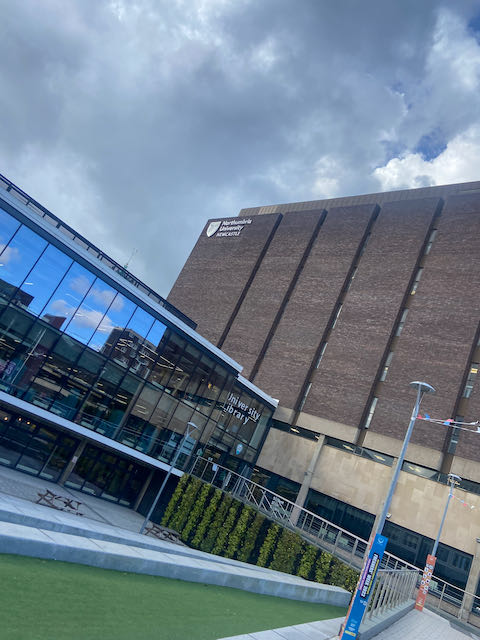
Unscheduled or not, I love a trip to Newcastle. It’s Charlie’s home now, but for a while back there it was mine. His first-year lectures taking place in the Lipman building at Northumbria Uni where I had my French and Spanish tutorials and lectures in the late 1980s and early nineties. His second year flat in Heaton just two roads away from my final year flat. He humours me in my reminiscences and always finds a way to take me back to campus for walk past the Student Union and Library.  

I’ll always remember mum and dad driving me up to Newcastle for the start of my second year and bursting into tears over the frozen veg aisle in Co-Op. I’d felt the tears building during the four-and-a-half-hour car journey north but managed to keep a lid on them. Until Co-Op.


I’ve no idea why Co-op triggered them and not the service station where we stopped for a quick tea and toilet break. Or even when I said good-bye and closed the front door behind them, knowing they were on their way to my uncle and aunt’s, a few miles away from where I live now. And I couldn’t explain why I was crying, but every ready mum had a pack of tissues, a hug and a ‘you silly sausage’ before steering me to the checkout. With the peas.

I guess I was simply in that awkward in between stage. I’d been living away from home for the first time, all semi-grown up but then back home for the summer and very much the adult-child. It’s a tricky dance and a little discombobulating for everyone.

I felt the same feeling in the air yesterday walking up and down the aisles of Asda with overloaded baskets of tins of chick peas, chopped tomatoes and cleaning products, none of us having a £1 coin for a trolley. No tears in the frozen aisle this time, but still that sense of being in no man’s land with mixed emotions gently ruffling the surface.


My brain has a habit of somersaulting and back flipping through these dates and reminders. These markers in time, sometimes idle reflections, other times acting as guide rails to help me understand where I am now and how I got here.

Take August. This August marks nine years since we left Bath and moved to Bournemouth embarking on what turned out to be a shorter than planned time living by the sea and a major pivot point in our family story.

This August also marks eight years since grandma died, her death coming in between mum’s death in the May and dad in September, just a month later.

And this August bank holiday five years ago Andy took the kids to Kilnsey Farm to do wholesome family things like fish for trout and climb big hills and moorland while I went to hospital for my weekly PICC line check. Already tiring of the headscarves covering my chemo-bald head, but not quite ready to go public without them, I was still attempting to put on a good show of coping – for whose benefit I don’t know.


The three children do a great job of mostly keeping me in a forward-facing position when it comes to life, but all too often I find myself trying to make sense of the here and now against a backdrop of these anniversaries and reminders, sometimes forgetting to give the ‘now’ due attention, and I guess that’s what I’m trying to change.

I’m trying to breathe air and space into the now moments and this writing helps. Because even writing out the memories helps to take the heat and intensity out of them.

It helps me to piece together the ‘what’ and view it all with greater perspective, freeing up space to breathe. At least that’s the idea. It’s just that some memories need writing out a few times before getting to the point where they feel lighter and I can be more here, now.


Even this bank holiday in its own small way is a chance to pause. To not think quite so hard and go where the energy takes me.  And that energy right now is taking me to the kettle, the sofa and Heatwave by Penelope Lively, bought in Wigtown on my birthday just over three weeks ago. It isn’t beating myself up that writing this has taken way more drafts than anticipated to get it into a state I feel happy sharing.

Which I guess is partly why I’ve renamed this Gently Does It, because not only does it conjure up images of mum refereeing the boys tussling over the remote control or some Lego with a soft but firm, ‘gently does it boys’, but it’s also a reminder to relax into the now and to give my head a break from the backflips and somersaults, because let’s face it, I never was much good at gymnastics….

Thanks for reading, Harriet

PS I’ve got a little close to the writing and need to hit publish before I waver, so please forgive any stray commas and typos!

Writing about grief

It’s not like I don’t know that I’m a boom-and-bust character, it’s just that it still seems to take me by surprise when I emerge from any intense period and then slump.

It’s like a light malaise descends. Yes, there’s a fatigue, but it’s more than just being a bit weary. My body and mind are completely drained.

Take last week. I read at a Spoken Word event on Thursday evening. A lovely, supportive group and I read a five-minute piece about mum’s wake, an extract from a longer essay about mum’s funeral that I tweaked for the spoken word event.

Sitting here on the sofa almost a week later and it’s obvious, isn’t it? That immersing myself in that day would leave me drained. And that’s before I get to the bit where I walk up to the microphone and face a room full of people and quietly berate myself afterwards because I spotted things that weren’t quite right. Observations I should have included and wonder, did I do mum justice? Did I do myself justice?

And I wonder, if this is how I feel after reading just one short extract in front of friends, then what am I doing? Why am I doing this, writing about these difficult times and I start to doubt myself. Who’s interested in my wittering on and what is the point?

But then I tune into a faint bell ringing in the back of my head, because this is how I feel after sharing my words. Not these reflective, this is what I’m thinking, feeling articles. But sharing what happened, describing it, painting the picture in my head and finding a way to translate that onto the page. It takes its emotional toll and if I learned one thing from my years with ME it’s that emotional and mental fatigue can be as, if not more debilitating, than physical fatigue.

The reality is that I spent last week inhaling the incense in the church, feeling the lumpy ground of the natural burial site beneath my feet. Listening to the Ella Fitzgerald and Peggy Lee playlist playing in the background, looking at mum’s paintings and sketches. Sensory overload.

It brings it all up to the surface but it’s not in a bad or sad way. I wasn’t aware of sadness as an emotion when I was writing but I did feel myself sinking back into those days and weeks.

I was aware of tightening the writing, trying to get to the point and hitting the word count whilst being authentic and faithful to mum, my siblings. Painting that picture as vividly as I could and bringing people into the room with me. To help them hear the music, picture the artwork and walk alongside me. But sadness, anger, denial and those other inconvenient emotions associated with grief? No, not last week, but maybe I’m having a delayed reaction. Maybe that’s the fatigue I’m feeling this week.

It’s inevitable isn’t it that in the writing and editing, in the scratching of pencil across paper I reveal myself and my grief. That I see mum, my family and our shared history through other peoples’ eyes and that can be uncomfortable, challenging even.

But I also know that in speaking those words out loud, in feeling them vibrate as they exit my body, move through my throat, touch my mouth, my tongue and teeth and float into the air that they are leaving me. And that’s a good thing, isn’t it? That yes there is an intensity and release that comes with this life writing that brings fatigue, but isn’t that grief too?

Grief and waves are often mentioned in the same sentence, and I remember acutely those knock you to the floor panic attacks, the shallow breathing and emotional outbursts in the immediate aftermath. Those waves of grief that tossed me around.

But I’m in a different phase now – eight years on – that I don’t know how to describe but I do know that this writing helps. It helps me to remember and to acknowledge this loss rather than push it aside.

And there’s also something about living in a place, even if it is a place with strong family ties, surrounded by people who never met mum that urges me to find a way to keep her with me, and maybe writing is how I do it.

Image is Malham Tarn on a bright sunny New Year's Day 2023. Bright blue sky and the sun reflecting off the water. There's a tree with bare branches on the right of the image and a sculpture of a large hare on the left.

Here’s to engaging our core and quietly creating new pathways

These blogs drop into inboxes the final week of each month, it’s a nudge to hit pause, put the kettle on and have a little noodle about life. I’d love you to join the Moor Musings community, we’re a friendly, welcoming bunch.

I made a pact with myself to start this year differently, because it just felt different. I even wrote about it calling it This year feels different. In it I talk about my intention to not hold life so tightly. To loosen my grip a little, but in loosening my grip I almost let this email slip by.

That, and an inability to read my diary properly. Not for the first time this year I’ve got my days and dates mixed up and honestly, I thought I had a while longer to write this. But no, look at that. January is almost behind us already.

Realising I had fewer days than I thought to put pen to paper has been good though, because it’s forced me to focus. That said, bear with me because while this makes sense in my head (kind of), it might not translate so clearly onto the page plus I’m in danger of over-editing what I’ve written. 

It’s also part of a bigger conversation I’m having about things like boundaries and emotions alongside today’s topic, core beliefs. Conversations I was struggling to get to grips with it until I remembered something my sister (the viola playing sister, not the gardener) told me a good few decades ago. But once I did, bingo and so I thought I’d share it here and see what you all made of it. 

Soften your knees, engage your core and breathe

If you’ve ever had the joy of standing on the tube as it careers through the underground do you hold your breath? Rigid, braced for the next jolt and sudden movement? Or do you flip flop and find yourself thrown across the carriage only to land in some poor unsuspecting traveller’s lap? Neither particularly comfortable, nor effective. Try this Louise said: 

‘Plant your feet on the floor, soften your knees,
gently engage your core and breathe with the movement.’

Grounded despite the jolts

I tried it and despite the jolting and jarring, swinging and swaying I felt grounded. Rooted, but not stiff or resisting the movement. Plus, I was breathing and I don’t know about you, but I have a habit of holding my breath without realising it. And the beauty, I’ve discovered, is that it doesn’t just work on the tube, it’s helped me in other ways too. 

Because while I was an expert at bending and flexing with life, I didn’t know where my core was, let alone how to engage it. But thanks to a series of insightful, probing conversations and this visual, I can now picture my sense of self, my values if you like running through me. I see that by actively engaging my core values, I can stand tall, while my soft knees mean I can move with life without always collapsing in a heap. 

It allows me to be open – to people and opportunities – but without sacrificing myself in the process. Better able to move with life, but with less falling over, or feeling so battered when things inevitably happen. 

But what does this have to do with writing?

I guess writing in my notebooks has allowed me to get comfortable with these ideas, roll them around and find a language that works for me. I’ve spotted recurring themes to explore. Writing has given me confidence and helped me to find my voice.

It’s not that my values or beliefs are new. My core has always been there, I’d just forgotten how to engage it. And now that it’s strong(er), I feel free to say yes and no with greater confidence and less guilt. Boundaries I’ve resisted enforcing for so long are now settling into place and it feels freeing, not restrictive. I’m finding it so much easier to be clear about my needs and wants – with myself and others. It’s been something of a revelation.

I think that with this clarity the detritus and white noise is falling away, paving the way for lightness and freedom, authenticity and honesty. I’ve stopped second guessing who I am or always looking to others for validation and permission – I’m beginning to find my voice. Maybe some of this resonates for you too?

“Some of us don’t want to be tough alpha leaders. Some of us just want to write and wander the garden and breathe in the sky and nourish and nurture and quietly create new pathways and live our lives as our art.
To know the earth as poetry.”

Victoria Erickson

And finally

I hope this makes sense, if not all of it, then some of it. And if in doubt, just remember to soften the knees, engage your core and breathe. It’s always good advice as many a Pilates instructor has said over the years. Thanks for reading, and here’s to quietly creating new pathways.

Harriet

Image of the beach at Seahouses in Northumberland on a bright blue sky sunny February day. The sun is partially covered by a streak of white cloud, the sea to the left of the image, sand in front and to the right,

Writing into the weekend

I sent this out at the end of February to my mailing list, let me know if you want to have a monthly musings drop into your inbox.

February caught me by surprise. The first half spent counting down to a half term trip to Seahouses, an exact copy of the previous February half term – the ultimate ‘no thinking required’ holiday of dog walks on the beach and a trip to Barter Books. The second half of the month inching towards March, hoping for spring. Noting the daffodils, snowdrops and lighter afternoons with the odd cold snap keeping us firmly in our big coats and hats still.

Write to reflect

I’m partially writing this during Thursday morning Writers Hour. Normally I write onto blank pages in my notebook à la Julia Cameron’s Morning Pages, but this time I turned to my favourite reflective writing prompts. My go-to when I’ve dug myself into a bit of a hole and need help getting out:

  • What?
  • So what?
  • Now what?

Given that I’ve woken with a knotted stomach two mornings out of the past five this week with the same worries and anxieties filling my head, it’s a sign that I need to do more than just spill my head and heart onto the paper.

So I turned to these three questions, and you know what, it works. Open enough to allow me to write freely, with just enough subtle guidance to bring me at least one smiling ‘a-ha’ moment.

‘Two helpful words to keep in mind at the beginning of any writing adventure are pleasure and spaciousness. If we connect a sense of joy with our writing, we may be inclined to explore further. What’s there to find out? Perhaps too much stock has been placed in big ideas or even small ones — a myth! — but regularity seems like a key. Don’t start with a big idea. Start with a phrase, a line, a quote. Questions are very helpful. Begin with a few you’re carrying right now.’

Naomi Shihab Nye

Blank page or writing prompt?

I don’t know why, but generally I seem to steer away from writing prompts. Maybe it’s because I feel like I’m going to get it wrong, a hangover from school where I was always terrified of putting my hand up in class for fear of getting ‘it’ wrong. Those old habits and beliefs can be hard to shift.

But when I do persevere, they do elicit their own, ‘Oh, really? Ok, I did not see that coming’ moments which in turn triggers a little honest reflection. Take Tuesday’s Writing for therapy session, our warm up was to – without over thinking it – answer these prompts and write:

  • A colour
  • An animal
  • A place
  • A food
  • A song
  • A thing

Now I’m a green or blue kind of girl and dogs are my go-to animal, so how and why did I come up with the colour red and a hare? Interesting.

The thing is, it’s all information, whether it’s come from a prompt or empty page. Once written down I can choose to ignore it and simply enjoy the lightness that comes from having got the thoughts out.

Or it might just shine a light on something that warrants further exploration, whether that involves writing, a conversation or something else. But until it’s out of me I won’t know and it’ll all just keep swirling through my head, and that gets me nowhere but interrupted sleep and a knotted stomach.

‘Our evolutionary, ancestral wiring has rendered us highly skilled at retaining the learning lessons from bad experiences and left us rank amateurs at retaining the learning from positive experiences.’

Your brain on ink

Write to celebrate the good stuff too

I file this writing under wellness housekeeping. Simple things to help me navigate day to day life. I just have to remind myself to explore what’s gone well as well as the not so well. I guess it’s just that we tend dwell on the negative and seek lessons there rather than explore and celebrate the good stuff. 

I’m leaning into therapeutic writing as we head into spring because while March signals optimism with its spring flowers and blue sky it’s also a season of milestones and reminders. My breast cancer diagnosis, Mother’s Day as a motherless mother, my son’s birthdays just days apart, but for the past eight years with mum’s anniversary sandwiched in between.

Happy times mixed in with reminders of loss and change. We all have these periods and equally, it doesn’t need a milestone to throw us off track. There’s huge value to writing out day to day life too. 

‘You’ll likely be surprised at how much coherent writing emerges in a spare five minutes. Precede it with a minute of closed-eye deep breathing and follow with a read and reflection write, and you’ve got an oasis of clarity or relief in about eight minutes.’

Your brain on ink

Happy writing

I guess we can’t always predict how any given day is going to turn out so knowing that even a minute of tapping words onto a screen or scribbling onto piece of paper will help in that moment and possibly in the future is surely something worth leaning into. What do you think?

Thanks for reading, 
Harriet 

In the early hours of the morning

I assume it’s the early hours. I don’t open my eyes to check but measure it from the darkness in our not-quite subterranean bedroom and Andy’s deep, heavy breathing. Lying on his front, head resting on folded arms, his pointy right elbow dangerously close to crossing the midpoint, threatening to connect with my head.

My breath catches and I move. From lying on my back, a pillow under my head, another under my knees, I move onto my side. I feel a knot in my stomach and my brain flickers back to the memory of the deep sleep of the previous two nights. A barely there frustration, knowing that I can, when my body, brain and heart synchronise – still sleep a deep, uninterrupted sleep.

My increasingly attention seeking thoughts begin to roll around inside me. A marble rolling round a tilting bowl. It hits the base and I catch my breath. A barely-there panic flickers. My brain quickly tells me to take a breath. One single breath from deep in my belly and I feel the marble shift – a little.

Why am I panicking? I remember the panic attacks of 10 years earlier and recognise the same feeling. Rapid breaths. Rapid pulse. Why now? I force myself to use my rational brain to shutdown these thoughts and resent it. I resent having to use precious energy doing this when all I want is sleep .

I think about the next day, where I suspect this worry started. The work I’m due to hand in, taking up more headspace than it deserves but is this really the seed of my anxiety? And no, it’s not just this piece of work, but the next one, the one after that, the next call, the next item on the ever-increasingly demanding to do list. The feeling of never quite having enough time. Time running out. And the ever-present, persistent worry that I’ll be found out to be wanting, not good enough. A worry I work hard to keep to a quiet murmur but that stubbornly refuses to remain quiet.

I lie in bed, eyes closed. Brain and heart awake. And I know what I need to do. But first thank Emma, the psychologist at Maggie’s who taught me how to do this. How to get back to sleep. I hear her gentle voice leading me, reassuring me that I can do it.

And I summon the picture. A seven-year-old Saskia in raspberry pink chords, one foot lifted in the air as she scoots off into the distance. The sun and dappled shade of the trees lining the woodland path a halo around her blond, bobbed hair. Alum Chine, the solid, dependable support act to the showy main event at the end of the path. The beach. Our sanctuary. A snapshot of a simple Sunday afternoon.

And I’m gone.

Thank you Carole King

I wrote this in response to a Desert Island Discs task on the memoir writing course I’m doing. I was mulling over writing about Tapestry, Stevie Wonder’s Hotter than July or Supertramp’s Breakfast in America. And then I was scrolling through the channels on Saturday night and spotted the Carole King ‘Natural Woman’ documentary playing on BBC2. I took it as a sign.

I feel the earth move under my feet
I feel the sky tumblin’ down
I feel my heart start to tremblin’
Whenever you’re around

I feel the earth move, Tapestry, Carole King

Oh, those opening chords. They get me every time. I can’t hear them and not smile. A slow, lazy smile of recognition and ease. Because the thing about Tapestry is that it’s more than a piece of music. It’s an old friend.

It’s a friend that’s been around for years, a constant thread winding through my life. I remember our family album so clearly, the needle jumping a few bars into ‘I feel the earth move’ and again on ‘Home Again’. Waiting for the needle drop. Then the pause as I flip from Side 1 to Side 2. It’s a reminder to slow down. Take a breath.  

Tapestry has always been a reassuring presence, especially when life away from the vinyl was chaotic. The lyrics taking on different meaning, the melody reaching something deep within me.

The upbeat ‘I feel the earth’ contrasting sharply with the poignancy of ‘So far away’. Lyrics which spoke to my fragile teen heart, echoing the isolation I felt, living in a tiny village, miles from anything or anyone. And then decades later as an adult, taking on a different meaning after losing mum and dad just months apart.

So far away
Doesn’t anybody stay in one place anymore?
It would be so fine to see your face at my door
Doesn’t help to know
You’re just time away

In a sense Tapestry sums up what music means to me. It’s visceral. An emotional release. It connects me with the people who are most important to me. My family. My parents, mum especially. No longer here physically but feeling her presence through the music.

All of which sounds so melancholy. Maybe it is and maybe that’s ok? Maybe I need the music, Tapestry especially to let me know it’s ok to pause, to reflect. To take a moment. To unlock the emotions.